To absent friends
Your wedding day is one of the happiest days of your life. When you look around the room you’ll see all the people that you love, however you may also notice all the people that are missing from the celebrations too.
Not to put a dampener on proceedings but inevitably there may be some people who won’t be able to join you on your big day perhaps due to distance, illness or because they have passed away. Telegrams are often traditionally read by those who couldn’t make it and sometimes a toast is raised to absent friends.My own wedding day was tinged with some sadness as my father suddenly passed away 9 weeks before we got married. It was a huge shock and at one point we considered whether we should postpone the wedding. I guess this is why we bought wedding insurance but I didn’t want to be sat around on our chosen date commenting that we would’ve been getting married today. We decided to go ahead and it gave our family something positive to focus on.
I certainly didn’t anticipate having to organise a funeral in the midst of wedding preparations but it did give me some clarity for the day. My father wasn’t around much when I was growing up and he wasn’t always that reliable. He had been unwell for some time prior to his death and so we didn’t know if he’d be well enough to be a part of the day at all, let alone even turn up. Or if he had turned up whether he’d been ill at the reception. Although it was unpleasant circumstances, at least I knew whether he would actually be there or not!
We had already asked my mum to do the ‘mother of the bride’ speech and my Grandad proudly walked me down the aisle (which was fitting as he was such an influential part of my life), and my husband toasted our absent friends in his speech. We didn’t want the day to be dominated by the recent sad events, so we chose not to do anything more public – everything was still too raw to cope with anything else.
I knew the day was going to be emotional but we also had this immense warm feeling of love from all our friends and family who were there and all knew about the ‘elephant in the room’. They were so caring, supportive and encouraging.  There was torrential rain the day before we got married (it was August – thanks British weather!) and again the day after. Yet on the day of our wedding it was glorious sunshine and the grass was a lush green and the flowers were all blooming after being refreshed from the rain. In the car on the way to the church, my Grandad told me that he thought the sunshine was his late wife (my Nanny) shining down on us.
I know that my other Nan still watches our wedding DVD back frequently so that she can see her now late husband enjoying the day. The photos too are a snapshot of the people that were in our lives at that time and who we were fortunate to share our special day with. There were poignant moments but the sadness didn’t dictate the day. It was certainly a day of huge celebration. We didn’t forget those that has passed but we didn’t dwell on their passing.
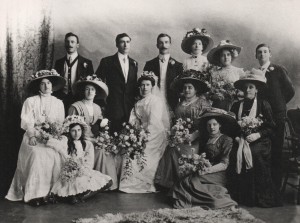
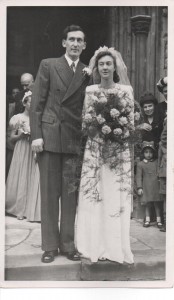
Here are some suggestions of ways to privately or publicly remember lost loved ones at weddings:
- Photographs – framed photos set up on a table or part of a family tree, hanging in photo charms on your bouquet, hanging from shoes or placed in a locket
- Jewellery – wear heirlooms or gifts from the loved one, wear their wedding bands tied round an ankle or wrist, wear or melt down their wedding band to make your own
- Embroidery – material from a piece of their clothing stitched in your wedding dress, use their handkerchiefs or ties, have monograms of their initials stitched in your dress
- Candles – a lit candle in church or on a table in the reception
- Flowers – use their favourite flower, have a single flower in a vase, put your bouquet on their grave afterwards
- Ceremony – dedicate a reading to them, include a tribute in the order of service, get the celebrant to mention them
- Chairs – have a reserved seat for them at the ceremony (although this may be a little emotional to see an empty chair there)
- Reception – name tables after them, toast them in your speech, place a drink for them at the bar, use a special piece of music
- Favours – donate to a relevant charity or place a charity pin as a favour
- Releases – let balloons, Chinese lanterns or butterflies float off in to the sky
‘If there ever comes a day when we can’t be together, keep me in your heart, I’ll stay there forever.’
A. A. Milne
If you like reading our blog then we’d really appreciate your support. So please vote for Hanami Dream in the wedding category of the UK Blog Awards #UKBA16 http://www.blogawardsuk.co.uk/ukba2016/my-entry/hanami-dream.
Voting is open until Monday 25th January 2016 at 9pm. You can vote once a day, so please keep voting for us.