by Hanami Dream | 13, January, 2017 | blog, guest post, tips, traditions
A topic very close to my heart (and sweet tooth) is cake!
Photography by Farrow Photography
www.farrowphotography.com
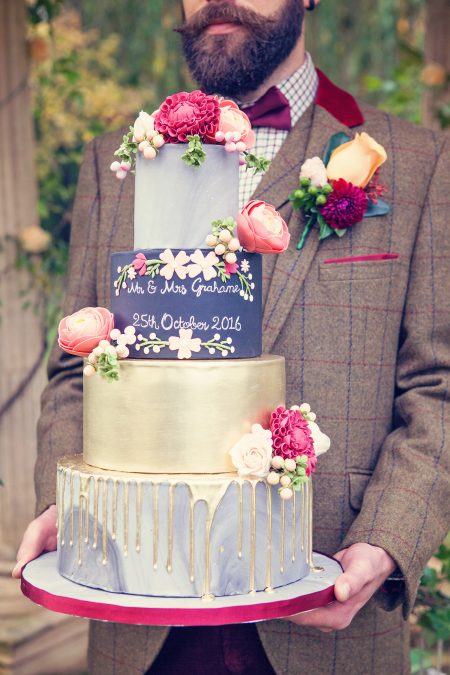
When it comes to weddings, cakes are often the focal point of the wedding reception – proudly displayed, incorporating themes and colour schemes of the day, and featured in one of the main staged events of the day – culminating in a great photo opportunity when it formally gets cut.
There are many elements of a wedding that are steeped in tradition, superstition and symbolism. Here I unravel a little behind why wedding cakes are included in the festivities and then The Pretty Cake Company give their advice for the perfect ‘recipe’ to get the wedding cake of your dreams.
Even though some couples are picking alternatives to the humble wedding cake (such as ‘cheese’ cakes, cupcakes, giant porkpies, quiches tiers and pancake stacks to name a few), the evolution of this wedding element is nothing new as it’s seen many guises over the years including bread rolls and pie.
The custom originally dates back to Roman and Medieval times when bread would’ve been thrown at the bride. Thankfully this developed into the breaking of the bread over the head (symbolizing the bride losing her virginity).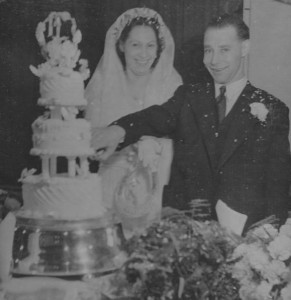
Over time this progressed into guests bringing baked goods to the wedding and piling them up as high as possible. The couple would try and kiss over this high cake without it falling over and were deemed to have good fortune if they were successful. Not content with the instability of a baked goods stack, one clever baker came up with the idea of sticking the rolls together and the Croquembouche was born.
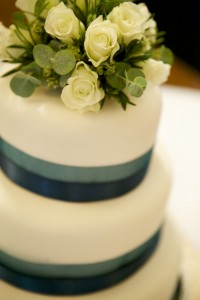
Today’s traditional wedding cakes have a rich fruit cake (a sign of fertility), often a gorgeous layer of marzipan (that I can’t get enough of! ) and white fondant icing. The white colour of the bride’s cake was again a sign of purity and also one of wealth as fine white sugar would’ve been expensive back in the day. The whiter the cake the wealthier you were plus the number of tiers showed extravagance too (although often some tiers could be fake ones to save money!) Plus an alternative ‘darker’ groom’s cake alongside (perhaps in chocolate).
Photography by Farrow Photography
www.farrowphotography.com
Traditionally, the cutting of the cake (as well as being a staple photo opportunity) was done by the bride on her own (to symbolize losing her virginity) and she would hand out the cake to ensure fertility. Nowadays it is the first task performed together as a married couple. Some couples feed each other the first slice as a sign of commitment (or smash it in each others’ faces if you’re feeling cheeky!)
With the bottom tier for cutting, the middle tier for sharing, the top tier is often saved for the first anniversary or christening.
Meanwhile, symbolic charms placed in the cake attached to ribbons can be pulled out by the bridesmaids to predict their fortunes. Plus it was thought that single people who slept with a slice of the wedding cake under their pillow would dream of their future spouse.
There is so much tradition and choices to call upon to create your wedding cake and this element continues to evolve with emerging geode cut out cakes, crystalling detail, food walls and even wedding cakes with image projections on them. Take a look at some of my other trend predictions too.
Here are some top tips from the incredibly talented Samantha from The Pretty Cake Company with a cake designer’s insight into picking your cake and a look at current wedding cake trends to consider.
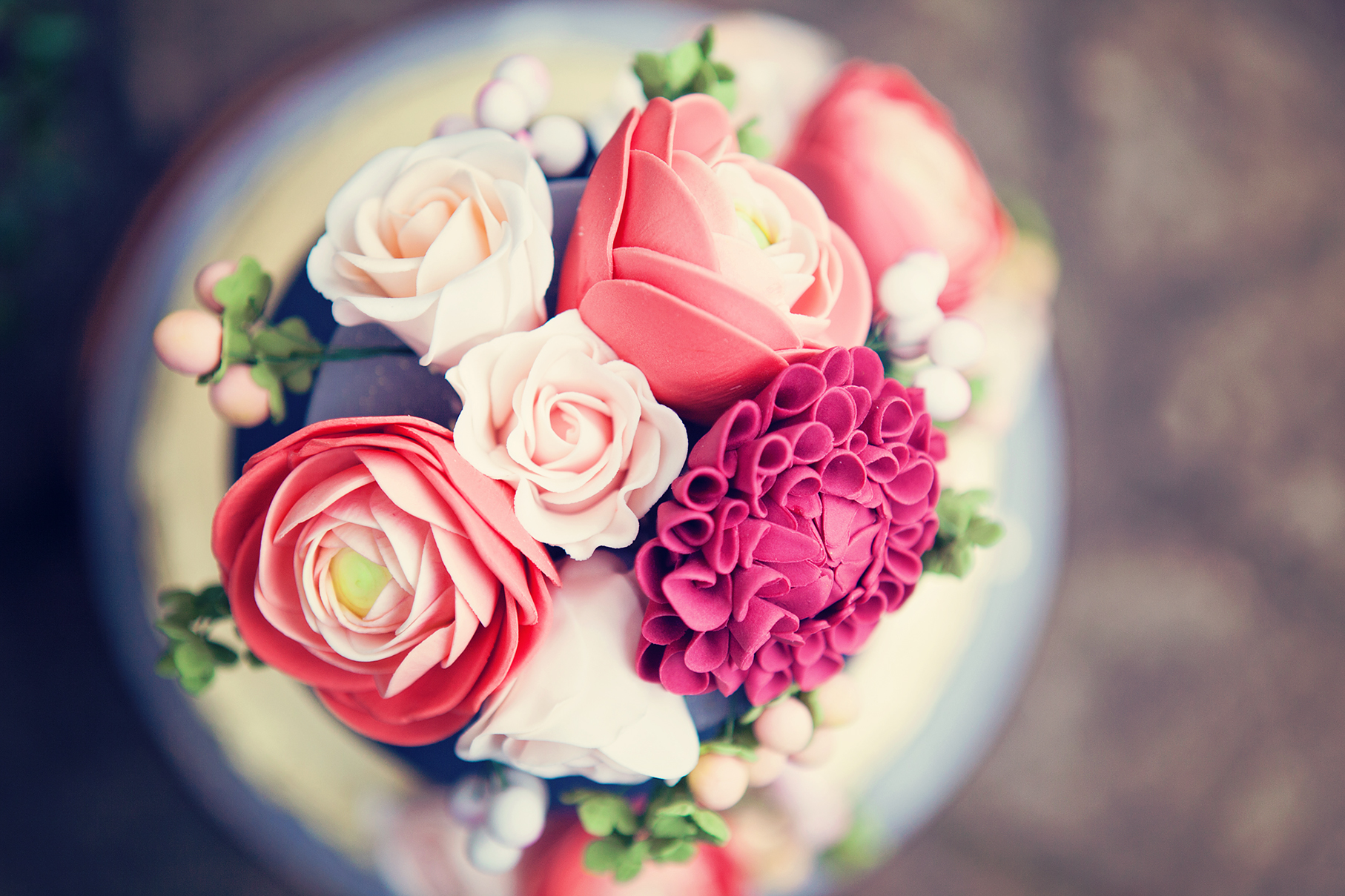 The wedding cake will be the most prominent centrepiece of your wedding reception with the potential to be a highly decorative work of art. So deciding on what form your wedding cake should take, is one that should be given very careful consideration.
An average wedding cake now is upwards of £500 and can go into the thousands, so your requirements will dictate your budget. The costing is primarily dependent on three things, size, flavour and decoration.
SIZE
When contacting cake designers it’s important to give as much information as possible. Give your anticipated guest number as this will allow the cake designer to work out what size tiers would be most appropriate. If you would like to reserve the top fruitcake tier for a first anniversary or christening then do mention that as well.
I have had clients in the past who want very tall grand wedding cakes, but not necessarily all the cake that would come with it, so think about the option of using polystyrene dummies to add extra tiers as this would help reduce the cost.
FLAVOUR
Simple sponges such as vanilla and lemon tend to be the cheapest with other most popular flavours such as chocolate, carrot and fruitcake, being more expensive due to the ingredients cost and increased time taken to make them.
Ask your cake designer what other flavours they could suggest as other flavours can often be made by adapting existing basic recipes. Other popular flavours that I have done in the past are coffee and walnut, orange and almond, lime and passion fruit, toffee and salted caramel, champagne and strawberry, but with lots of good quality flavouring extracts on the market, it’s very simple to come up with some more original suggestions.
Sometimes you can make a simple flavour more exciting by simply making the filling a bit more interesting, like lemon cake with a passionfruit curd buttercream or chocolate with a salted caramel buttercream.
DECORATION
Decoration is by far the most influential part of costing the cake as this is what takes the most time and requires the most skill. Things like sugar flowers, texture work and intricate pipework on the cake, can take several hours and sometimes days, so if you are on a budget, then maybe try and avoid these.
Here’s the ‘recipe’ to get the wedding cake of your dreams:
1. CONSULTATION
Check with your cake maker if they offer a face to face consultation, if there is a charge for it and whether cake samples would be available for tasting. It’s important that you have confidence in your cake maker and that the cakes will taste as good as they look. Some companies do charge for consultations, which might be deductible from the cost if you book.
2. EXPERIENCE
Most reputable cake makers will have a strong portfolio of their work which will be further substantiated with websites, social media pages and recommendations from previous clients and local venues. Do your research beforehand and choose a cake maker that has experience of the styles you like (such as elegant, pretty, floral wedding cakes versus novelty wedding cakes). Respect a cake maker who is honest with you and will tell you up front that they feel that there are better people out there who can create what you want.
3. AVAILABILITY
With weddings occurring almost any day of the week now, cake makers can be very much in demand. Ask your cake maker how many wedding cakes they take on in one week and how many people will work on it so that you know that your cake will not be compromised.
4. BOOK IN ADVANCE
I always advise my couples that once they have a date secured with their venue they should book, pay a deposit and reserve the date with their suppliers as soon as possible. Consultations and finer details can be worked out much nearer the time. Generally it’s best to book 9-12 months in advance. Often the cake is one of the first things you should book but one of the last things you should finalise as it can incorporate so many aspects of the wedding eg colours, flowers, fabric, stationery (which will only be known towards the end of the planning stage).
5. DEPOSIT
Ask when the deposit is required which tends to be between 25-50%. It’s always a good idea to make a note of when the balance is due to be paid. This tends to be between a month to 2 weeks before the wedding although check with your cake maker on their policies.
6. DIETARY REQUIREMENTS
Let your cake maker know if there are any allergies that they need to be aware of. However, also bear in mind that, unless you are using a very large company with allergy safe environments, it could be tricky to completely eliminate the risk of cross contamination.
7. ACCESSORIES
Think about how you want the cake displayed and how you’re going to cut it. A cake stand can dramatically change the way that a wedding cake looks and I always recommend the use of one. It adds precedence, height and is an added decorative feature. Most established cake makers will have a range of stands for hire. Some venues offer use of a cake stand as part of the package but always ask to see it beforehand, as they can be old fashioned silver stands which might not suit the style of your cake. It is generally the responsibility of the couple to return the stands within a couple of days of the wedding, unless this has been agreed prior and a collection charge has been paid.
8. DELIVERY
Make sure you let your cake maker know where and when the cake is to be delivered or if you are going to collect it. Most cake makers will charge for delivery and this will also include the return journey. They will also need to know who is the point of contact at the venue as you may be otherwise busy. Plus think about where the cake is to be set up, being mindful that it shouldn’t be in direct sunlight, or have a cluttered background.
Logistics aside, the fun part is picking what it’ll look like and how it will embody the theme of your special day. Here are some current trends in wedding cakes to give you some inspiration:
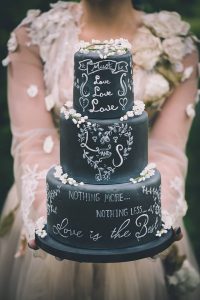
- Chalkboard: Chalkboards are often used at weddings for place settings, order of events and direction signs, so why not follow the theme through onto the cake, and personalising with a monogram or favourite quotes and lyrics. It’s also the perfect opportunity to show off some pretty calligraphy fonts.
Photography by Neil Hanson
http://www.nordicpics.co.uk
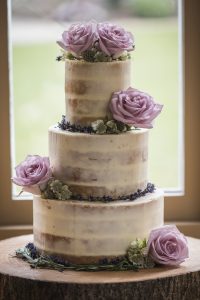
- Semi naked cake: The naked cake has been around for a number of years now so it’s about time there was a new twist on it! The semi naked cake has a thin scraping of buttercream which allows the sponge to show through slightly. It gives an interesting rustic finish which looks beautiful decorated with fresh flowers and fruits.
Photography by Neil Hanson www.nordicpics.co.uk
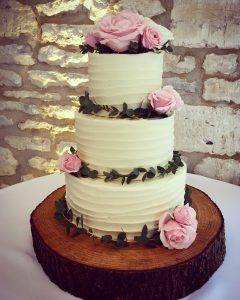
- Textured Buttercream: Lots of people love the thought of sinking their teeth into light fluffy sponge and a nice thick layer of delicious buttercream. So if you prefer buttercream to fondant then this is the perfect cake for you. Finished with fresh flowers, it gives an elegantly simple yet stylishly beautiful wedding cake.
Photography by Pretty Cake Company
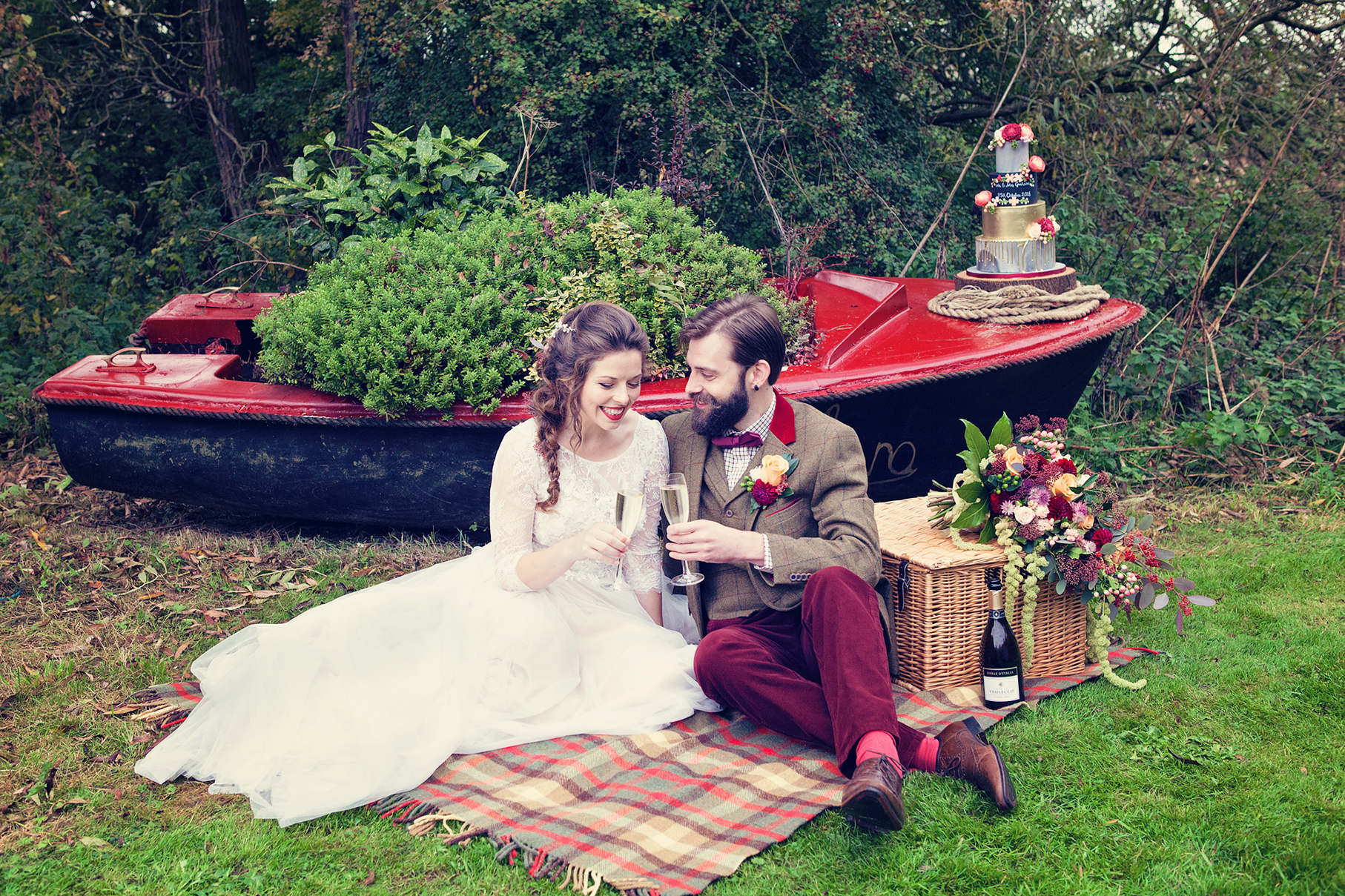
- Marble: Marble cakes are seeing a big revival at the moment and here is a cake which incorporates many on trend features. The marble tiers on the top and bottom are flecked with gold and the metallic drips on the bottom tier are also very fashionable. The chalkboard tier adds the opportunity for a bit of personalisation and the beautiful sugar flowers add a pretty feature which feminises the cake.
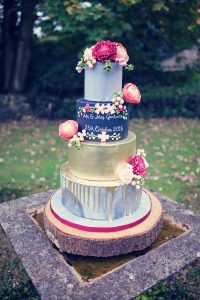
Photography by Farrow Photography
www.farrowphotography.com
- Ruffles/texture: Texture has been popular for a few years now and here is a cake which demonstrates texture in many ways. The vertical ruffles add an understated elegant texture; the gold sequins add sparkle and the pretty gold piping was inspired by a stationery design. Together with the sharp edge finish on this cake and the single garden rose on the top tier, this is a crisp, sleek and sophisticated wedding cake.
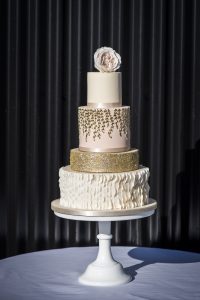
Photography by Neil Hanson www.nordicpics.co.uk
- Metallic and opulence: Metallic decoration can be seen in many ways, be it, metallic leaf, metallic lustre, metallic sequins or simple enhancements with a paintbrush and edible metallic paint. Here is a grand 5 tier cake with a metallic gold leaf tier. Metallic leaf can leave a distressed finish as it is very difficult to apply, but this is part of its charm. The cake was finished off with patches of intricate lace pipework and gorgeous sugar flowers.
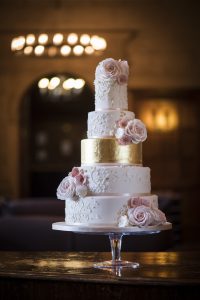
Photography by Neil Hanson www.nordicpics.co.uk
- Floral romance: Cake and flowers often go together, whether the flowers are real or if they are made from sugar. Here is a selection of recent floral wedding cakes showing how diverse each one can be.
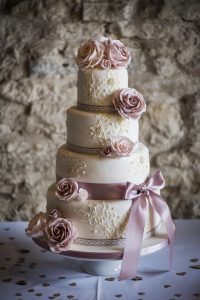
Photography by Neil Hanson www.nordicpics.co.uk
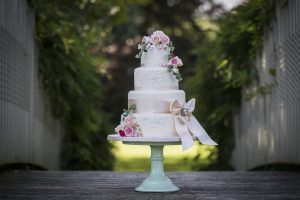
Photography by Neil Hanson www.nordicpics.co.uk
The Pretty Cake Company offers a friendly, personal and bespoke wedding cake design service to produce breath taking wedding cakes that will be remembered for years to come. They produce wedding cakes that are individual to the bride and groom – always focusing on the attention to detail that makes all the difference. They have over 10 years of experience in designing and creating wedding cakes and work closely with numerous prestigious wedding venues in Oxfordshire, Gloucestershire and The Cotswolds. They will work with you and take your ideas and inspirations in order to create a truly memorable wedding cake. They pride ourselves on using the finest quality and freshest ingredients available.
Unlike many other cake companies, they now specialise only in wedding cakes, as this is their true passion. Now they are able to focus on keeping up to date with current bridal trends and ensuring that their clients receive expert advice in the wedding cake field.
Clients are guaranteed a friendly, efficient service where quality is never compromised. Consultations by appointment only. They are based in Minster Lovell, Witney, West Oxfordshire and can deliver to a wide area.
 @Prettycakeco
 @The-Pretty-Cake-Company-Witney-Oxfordshire
 @theprettycakecompany
by Hanami Dream | 24, May, 2016 | blog, guest post, tips
The tradition of wedding flowers is steeped in symbolism and there’s lots to think about in terms of colours, meaning and seasonality.
Flowers have been a part of wedding traditions since at least Greek times when flowers would have been grouped together in a garland to be worn on the head and seen as a gift of nature. It would also contains strong smelling herbs such as garlic or chives to ward off evil spirits. In the Middle Ages, garlands were worn entwined with ears of wheat to symbolise fertility. And with the rarity of baths, the bouquets were a nice fragrant distraction from any other lingering smells!
Nowadays, wedding flowers can compliment and reflect the theme, style, colours, tone and surroundings of the day. You can include flowers in your bouquet, corsages, button holes, table decorations, flower walls, displays at venues or as confetti or petals sprinkled by the flower girls.
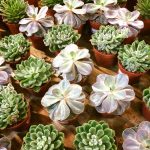
Flowers are a big focus in 2016 not only in the décor but with hair accessories and headwear. Plus a new trend of ring corsages is emerging and the use of wild flowers like daisies. It doesn’t all have to be about the flowers, as foliage will be as important or instead of flowers in displays. Alternatives to traditional flowers are seeing the use of succulents in bouquets, on tables and given away as favours. Plus instead of the usual confetti, there is now a herb toss as another option which gives such lovely aromas to this part of the day.
Then once you’ve finished with your bouquet (if you’ve not thrown it to your single friends), there’s also a lovely new trend emerging of the ‘lonely bouquet’ where you leave your bouquet in a public place, with a note for someone else to find – thus spreading smiles and the joy of flowers to others. (Google it, I’ve not made it up!)
We have asked the highly talented (and award winning) Dee McMeeking to help unravel some of the mysteries of picking the right flowers, at the right time of the year, for your special day.
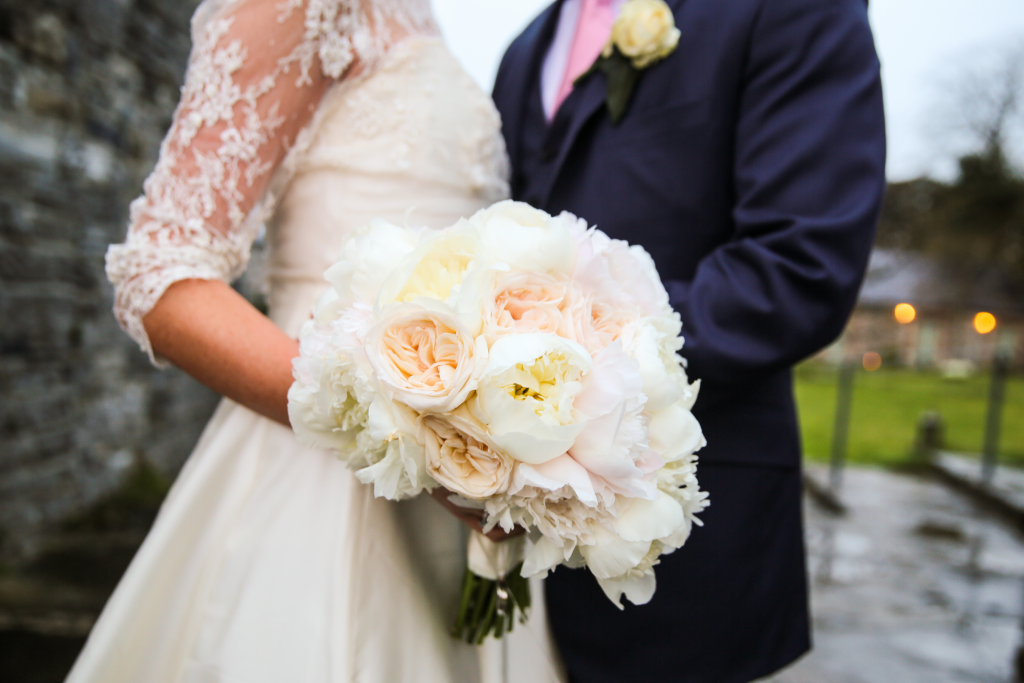
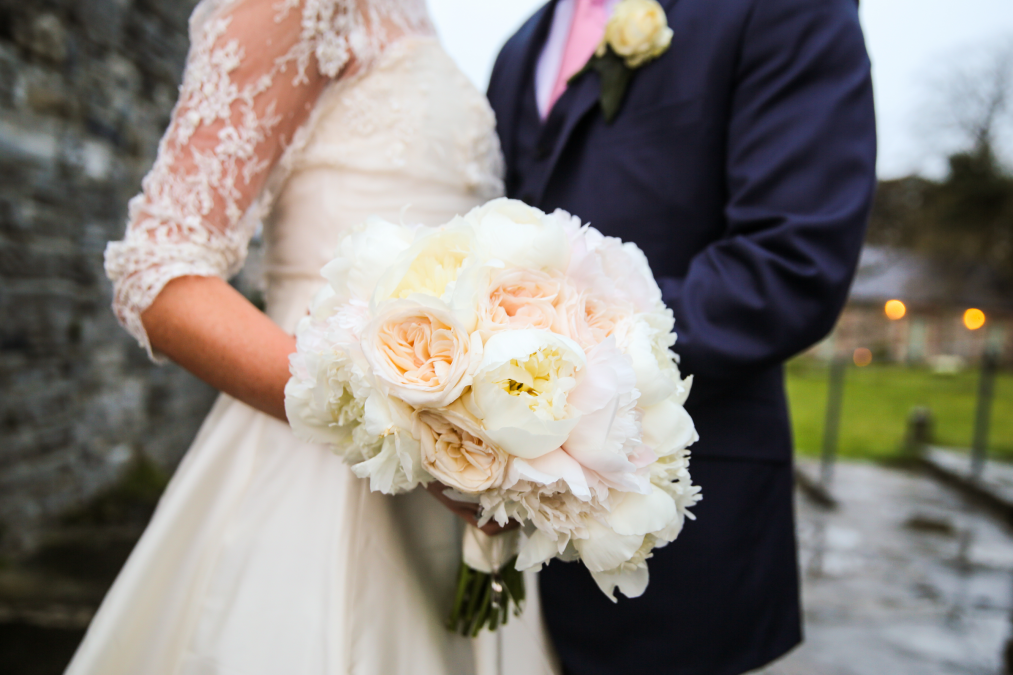
Photo credits: peony bouquet by Dee McMeeking, Photograph thanks to Nick O’Keeffe Photography
It’s one of those questions a bride to be will always be asked – “what flowers are you having?” and I know for some of you that can be a scary question! If you are blessed to know your hypericum berries from your viburnum then you will not need to read any further. But if your floral knowledge is more daffodils and dandelions then here is my quick guide to things you need to know about seasonal wedding flowers.
1) Flowers are seasonal
In theory that means that you can’t have certain flowers at certain times of the year. Think of it like Cadbury’s crème eggs or Easter Eggs – you don’t find them easily in shops in August or December! Flowers are the same. So if you have set your heart on a bouquet of peonies and you are getting married in the UK in November you may struggle. I say ‘may’ because the majority of cut flowers we use here in the UK are imported and most flowers are in season and being grown somewhere in the world, but that will make them more expensive.
Top tip: There are a couple of great apps that can help you out here – Flowerwheel, or Flowerbook. Both allow you to see when flowers are in season and more importantly photos and colours! So if your answer to the “what flowers” question is pink and white flowers, you can take this a step further and get some ideas with super search functions by colour.
2) Flower prices vary during the year
Flowers are one of those products where the prices will vary, sometimes quite significantly, at different times of the year. It’s as much about supply and demand as it is about seasonality. There is one big hot spot in the year that I have to mention – Valentine’s Day! The price of red and pink roses can treble if not quadruple just for that week. But other flowers can be cheaper than normal – such as orchids – purely because everyone is buying red roses.
When something is in season, it is naturally growing at its peak, the price is lower. So if you work with seasonal flowers you can get more for your money.
3) Using local flowers can save you money
More and more brides are opting for an informal look with their wedding flowers. The country garden “just picked” look where your flowers look more natural and less structured. If this is your style then you can do your own wedding flowers – certainly for your wedding reception, you might want a bit of help for bouquets and button holes. There are UK based growers who will sell you seasonal flowers “by the bucket” you just pre-order them, collect them, and then display them in your own personal style. Buying direct from the grower will save you some money and you will have very fresh flowers, often picked that day. To find your local suppliers check out this site http://www.flowersfromthefarm.co.uk/
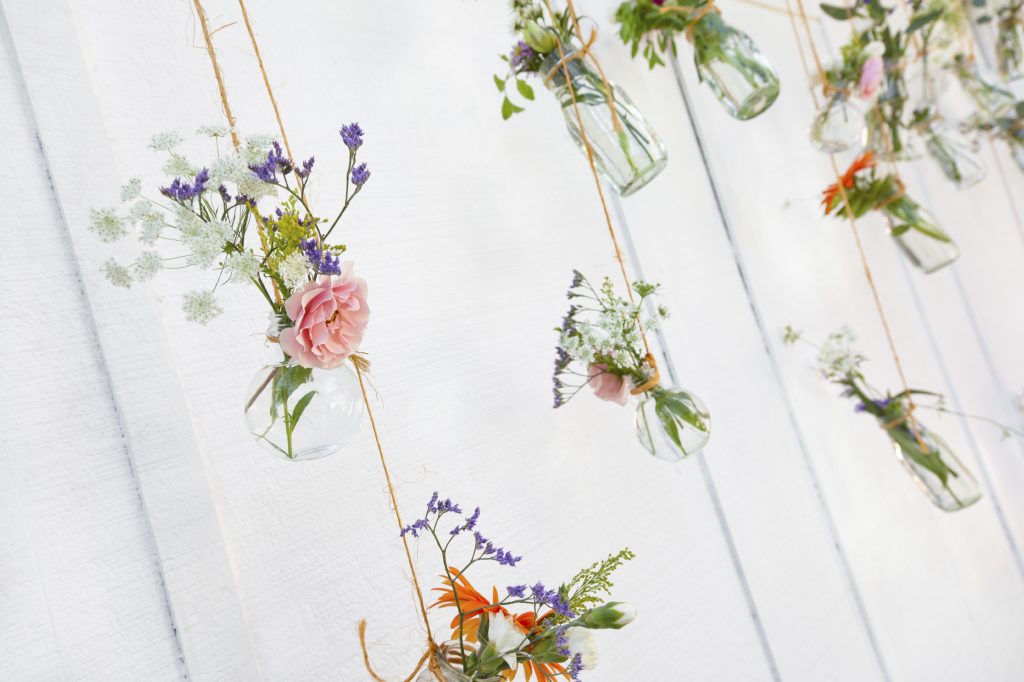
Photo credit: ©iStock/jesshorsenaround
4) The colours of flowers change with the seasons
I mention this purely from an experience I had with a bride who was fixed on her colour scheme of navy and gold and her flowers HAD to match to these colours. Now even at the peak of any floral growing season you are not going to get gold flowers and navy is also a tricky one too! Especially if you are in February in the UK! So if you are getting married in Spring or Winter remember that you may have to compromise with your flower choices. My solution was to go neutral with the flowers – ivory, white and creams and then add her gold and navy in through adding details such as ribbons and containers. Sometimes you may just need to be a little creative with your colour scheme.
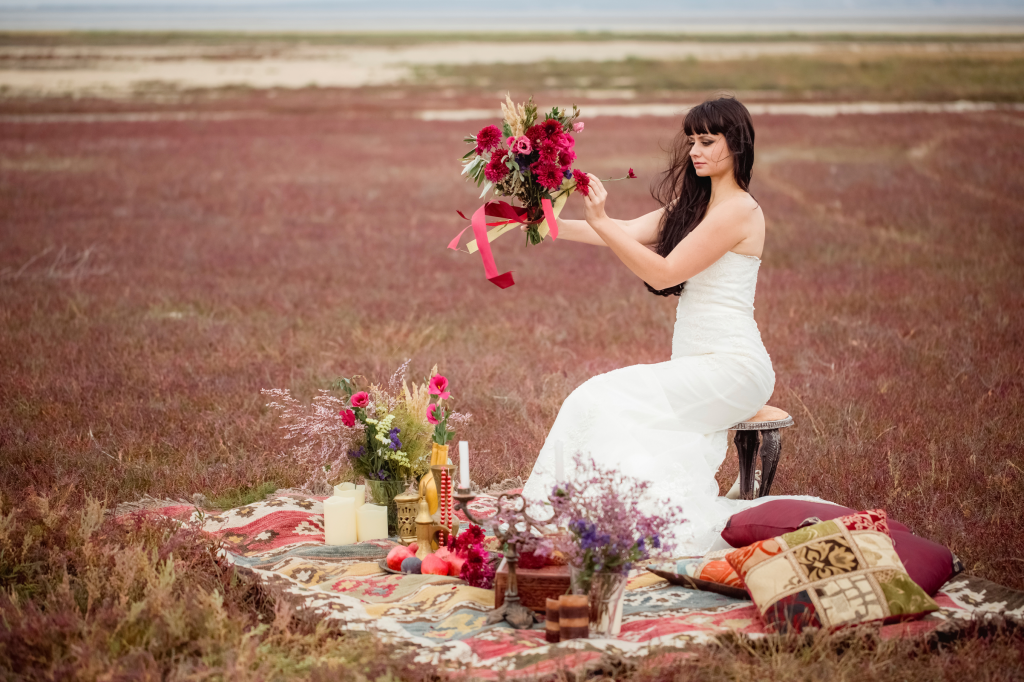
Photo credit: ©iStock/EvgenyBaranov
5) Where do I start with selecting my flowers?
Here is how I would approach finding out what is in season for my wedding flowers. First of all start with your wedding date and figure out which season you are getting married in. Search for “wedding flowers in season UK” now the UK bit is important because if you stumble on an American wedding blog in your search results what’s in season there may not be accurate for you! You will be surprised how many great guides there are already out there on blogs (just like this blog- check out these posts on seasonality, colours, and meaning of wedding flowers). Then I would pick out a few of these flowers that I liked and pop straight over to Pinterest and create a wedding flowers board. Search for “wedding flowers with xyz flowers” and see what emerges. When you have some visuals and you know roughly what is available at that time of the year you have enough research to either take to a florist or to source the flowers yourself!
Happy planning!
Dee McMeeking is the designer (wedding planner, wedding stylist & floral designer) behind Dee McMeeking Wedding Styling, a wedding styling & floral design business based in Warwickshire, UK & Dublin, Ireland. If you’re a creative with lots of great wedding ideas but need some help to bring your unique style to life on your wedding day, then contact Dee today at weddings@deemcmeeking.com. Dee works with clients from anywhere in the world and is waiting to hear more about your wedding styling ideas.
@deemcweddings
@deemcmeeking
by Hanami Dream | 3, May, 2016 | blog, traditions
There are many traditions, rituals and customs that people uphold and perform in connection with weddings. Some of these have now lost their relevance in modern society and sometimes we are not even sure why we undertake them. However we continue to perform them for fun, family tradition and superstition, especially as many of them have derived from efforts to bestow the happy couple with good luck.
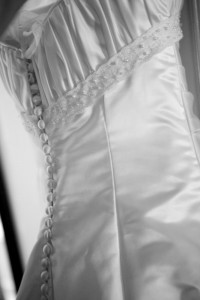
There are many superstitions surrounding what the bride wears (see our post Wedding traditions: Don’t forget the silver sixpence in your shoe!) and it is often said that is unlucky for:
- the bride to make her own dress
- the groom to see the bride in her dress before the ceremony
- the bride to wear her entire outfit before the wedding day
Bridal wear is really seeing a big shift in trends to provide new, innovative and unusual styles to make sure the bride makes a statement and is different to any other on her big day. Trends that are appearing on the catwalks include: mix & match separates, crop tops, high necklines, off the shoulder, asymmetric hems, backless dresses and plunging v necks on the back. For the more daring and alternative bride there’s fringing, jumpsuits, palazzo pants, peakaboo skirts or even capes.
Rather than a plain dress, some brides are opting for a floral one or even camo print (which is starting to be really popular in the US – not necessarily in classic hunting camo but more pink or snow camo, or accessorising the traditional camo with orange accents!) Plus the recent bridal fashion shows for Spring/Summer 2017 also saw a shift towards pastel and even black dresses.
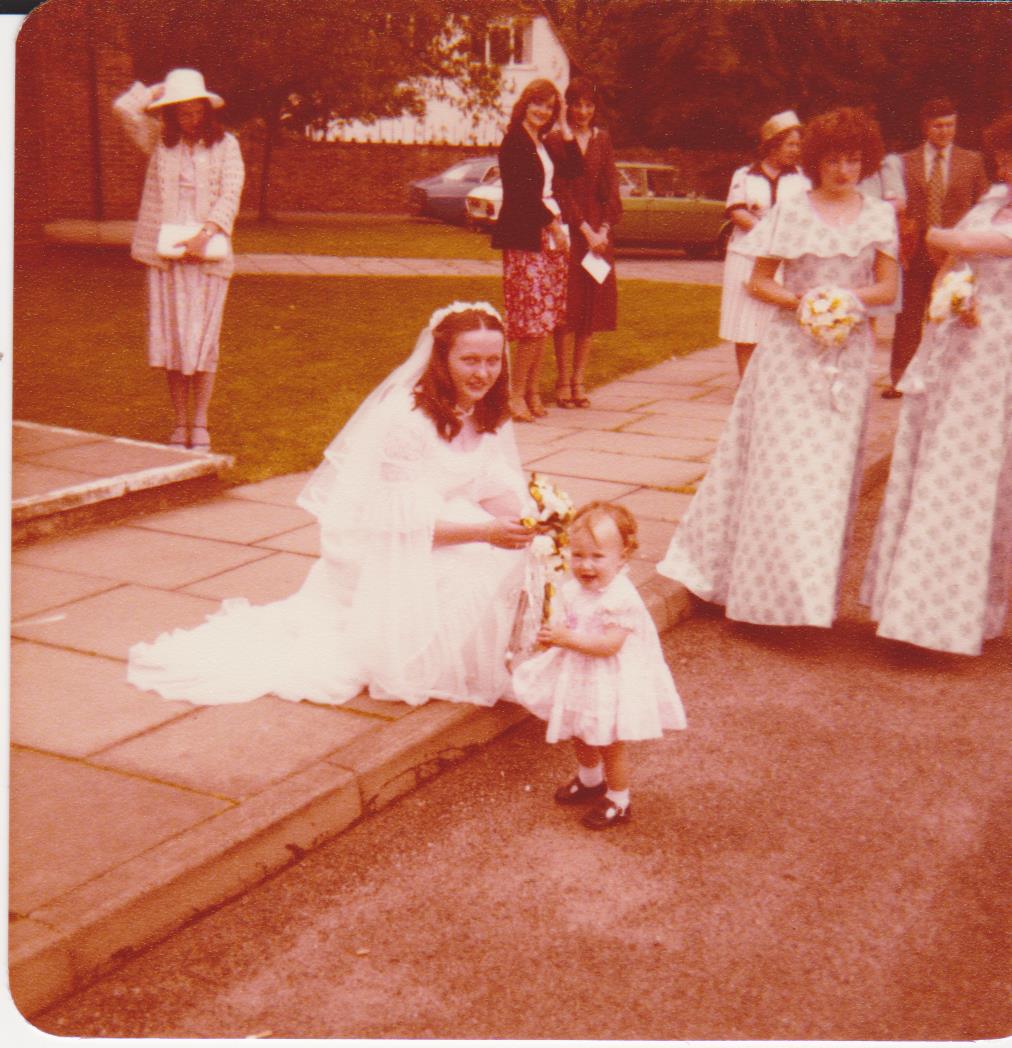
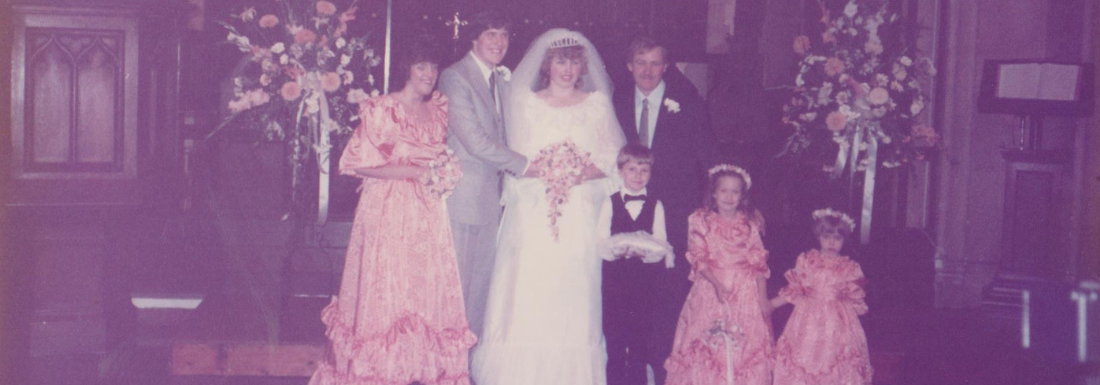
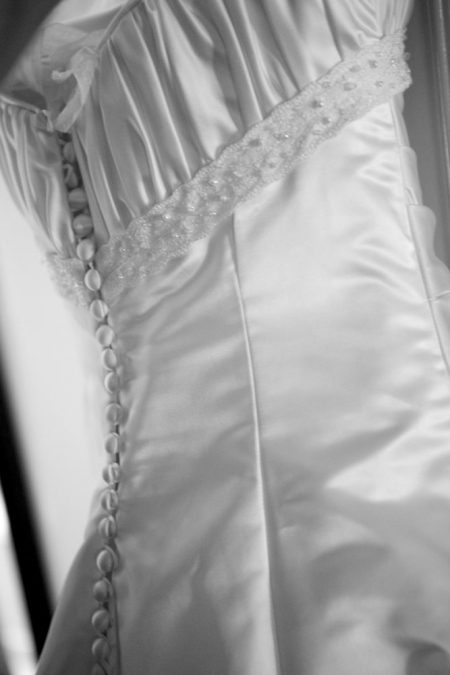
This may seem like a turn away from the traditional white wedding dress, however, it’s not that long ago that white wasn’t the usual colour to wear for your wedding day either. White was actually seen as quite an impractical colour as it would show the dirt and therefore you’d probably only get one wear out of it. So it was seen as a colour worn by the wealthy and not common as a wedding dress colour. Whilst modern culture symbolised white as a pure colour, you nearly always see the Virgin Mary depicted in blue as it reflects calm and purity. In fact, until the 15th century in the UK, white was seen (and is still in some cultures) as a sign of mourning.
Until Queen Victoria in 1840, most British royal brides wore silver. However her beautiful white lace court dress influenced the trend for white dresses in all brides as before this time they would’ve worn their Sunday best dress. In fact, red dresses were often a popular choice and this colour remains popular (and lucky) in Thai, Chinese, Vietnamese, Indian and Korean cultures. Then during World War 2, brides wore nice tailored suits or even their uniforms.
As the wearing of white wasn’t such a common occurrence, it’s no surprise that there was a rhyme to determine which colour would bring the most luck:
Married in white, you have chosen alright.
Married in grey, you will go far away.
Married in black, you will wish yourself back.
Married in red, You will wish yourself dead.
Married in green, ashamed to be seen.
Married in blue, you will always be true
Married in pearl, you will live in a whirl
Married in yellow, ashamed of your fellow.
Married in brown, you will live in the town
Married in pink, your spirit will sink
Whichever customs and traditions you decide to incorporate into your big day, we wish you health, wealth, happiness and all the very best in your married life.