by Hanami Dream | 27, December, 2016 | news
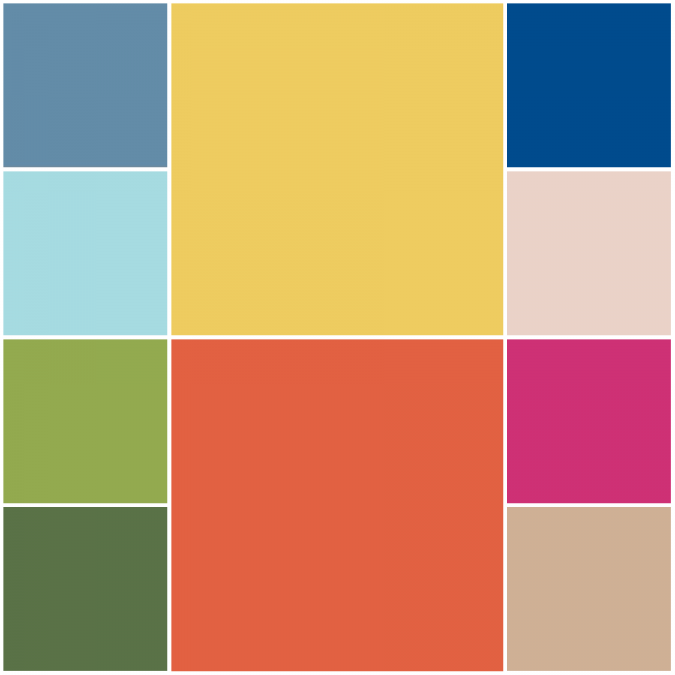
- Top 10 Spring 2017 colours from Pantone®
- Top 13 local catering vans for weddings in the Cotswolds
- Inspiration: autumnal marsala & gold Wind in the Willows wedding
- Top 20 local wedding venues in the Cotswolds
- Local wedding suppliers at Cogges Manor Farm Wedding Open Day
- Pantone® announces Fashion Colour Report Fall 2016
- A complete blank canvas: our guide to tipi weddings
- Inspiration: rustic pink rose barn wedding
- Why am I called Hanami Dream?
- Alternative wedding guest book ideas
by Hanami Dream | 15, November, 2016 | blog, tips
Your wedding day is a unique kind of day when your ‘circles’ all come together. It’s not often that you have all the people from different walks of your life in the same room at the same time. How wonderful to look around and see the people you love just there for you two.
Photographs are a brilliant way of capturing who celebrated your big day with you, plus traditionally guests sign a keep sake book and leave a poignant message for the happy couple to read back after the special day. This lovely tradition has got some modern updates and ingenious alternative ideas.
Here are a few of my favourite wedding guest book alternatives:
- Photographs
- Take polaroids of guests on the day and put them in a book alongside a handwritten message
- Have a photo booth for people to take their own snaps of the day
- Have a video diary or place where people can leave their own video messages
- Paper
- Have a recipe book where everyone contributes a favourite recipe to be printed in a book (see recipegiftbook.com below)
- Get guests to complete a calendar with their message on their own birthday or special anniversary
- Ask guests to write how they know bride & groom on postcards
- Provide advice cards for guests to suggest date night ideas
- Leave notes and cards in an engraved oak lift-lid box (see Make Memento below)
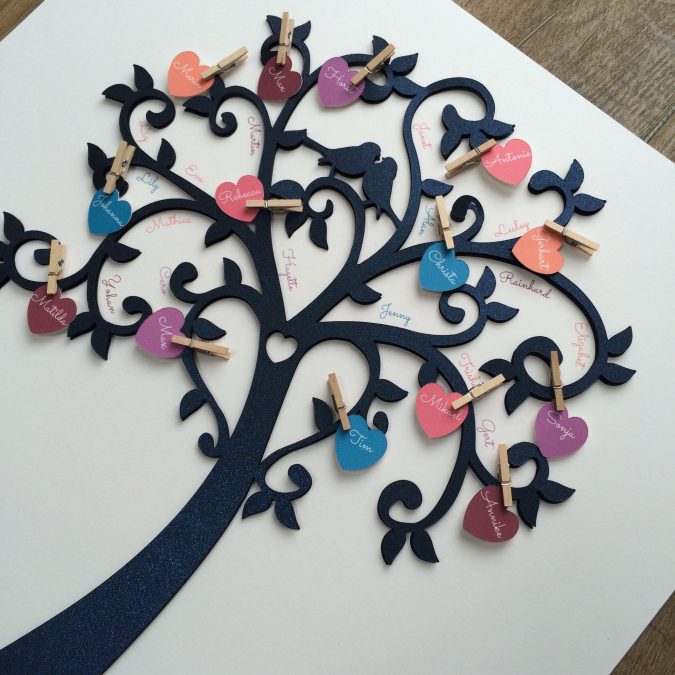
- Get guests to put their best wishes on to labels to hang from a wish tree (see Tree of Hearts below)
- Ask guests to write their messages and seal them in a bottle to be opened on their first anniversary
- Furniture / homeware
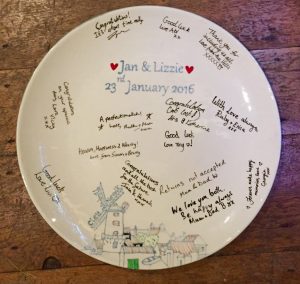
- Encourage guests to sign a pottery wedding plate that you can display or use in your kitchen (see Busy Brush Café below)
- Get guests to sign a piece of wooden garden furniture such as a swing seat, table or bench
- Ask people to sign decorative, keep sake items for your home such as a quilt, globe or Christmas baubles
- Provide bottle labels for wine that people can write advice or wishes to be read on wine to be opened for future anniversaries
- Poster / artwork
- Use guests fingerprints to create the leaves on a tree on a canvas that be hung afterwards (see Tree of Hearts below)
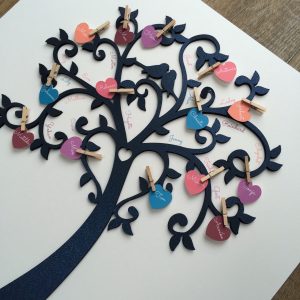
- Have hand written messages on various hearts placed around a cut out framed tree (see Paper Tree Design below)
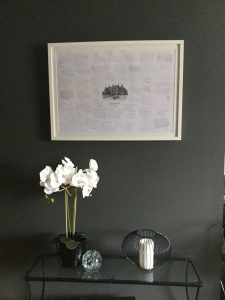
- Frame an illustration of your venue which guests can sign (see Illustrated Invites below)
- Get your guests to contribute and colour in a giant poster mural (see Fancy Features below)
- Ask your hen party to all ‘kiss the miss goodbye‘ and place their lipstick mark next to their signature for instant framed artwork
- Provide wine corks for guests to sign and then be framed
- Place signed pebbles or wooden hearts in a big glass vase
- Games
- Get guests to sign jigsaw or Jenga blocks
- Write labels with wishes and attach them to balloons that can be launched at the end of the day
And take a look at these brilliant local suppliers that can bring a different angle to a guest book at your wedding:
Busy Brush Café
Create a beautiful and highly personalised platter or serving plate, design it with a painting of your venue or of the happy couple and have it glazed and fired ready to present at your wedding along with a special ceramics pen that guests can use to write their message on the plate.
Busy Brush Cafe offer wedding plates of all shapes and sizes that can be used every day in the kitchen or hung up on the wall for decoration. Spend a couple of hours in the quirky and supportive cafe environment and have fun painting up your own plate, or have one of the team design it all for you to specification. The plates can then be collected a few days later once they’ve been glazed and kiln fired and the team will provide you with a permanent ceramics pen for guest messages that will last a lifetime! Prices range from £40 to £150 depending on size and detail required.
 @busyatbusybrush
Fancy Features
Fancy Features make Giant Colouring In – fully personalised artwork hand illustrated to canvas ready to get coloured in by you and your friends at your event. We design and deliver artwork to clients all over the world.
Illustrated Invitation

A small family business located in Somerset, who are passionate in bringing a niche service to wedding stationery.
Producing beautifully detailed pencil sketches of the couple’s wedding venue or church which are then used as a theme throughout the wedding stationery products. Choices of colours, font styles and wording of invitation according to your needs ensures a personal and unique touch to the couple’s stationery. “Designed exclusively for You”.
Our Guest Comment Frame is proving particularly popular for its uniqueness as we go one step further than to just leave a blank space for guests to write on at the reception.
We provide guests with ‘message cards’ for them to write on during the reception, which has proved to be a great talking point after the speeches have been done and dusted and a lull in the proceedings whilst coffee is being served.
After the honeymoon, the couple send us the cards to be edited onto the frame and these original cards are returned together with the completed frame.
Our specialty is that we either print or scan the original messages onto the frame around the sketch, ensuring that perfect spacing and an overall pleasing look is achieved. Providing this in either a black or white modern frame, this product not only doubles as a great keepsake but great to hang proudly in the home as a reminder of the Special Day!
 @illustratedinv
theillustratedinvitation
 The Illustrated Invitation
 theillustratedinvitation
Make Memento
Our hand-engraved, solid oak keepsake boxes make the perfect wedding gift for the happy couple! Perfect for storing treasured wedding keepsakes and mementos, you can make this gift extra special by adding a personalised engraved date to mark the special occasion!
Handmade to order in our studio, our solid oak wood boxes have been lovingly designed and crafted using thick, heavy European oak timber. The wood is hand-cut, then individually sanded and treated to enhance the natural grain and preserve the beauty of the wood. Our boxes are finished with a chic hand-engraving and black infill, with the heart arrow finished with a red infill – producing a truly unique style. Finally, our oak boxes are finished with a clear gloss protective varnish to ensure durability and display a stunning finish. These lift-lid boxes are great for presenting and storing cards, photos and other treasured wedding mementos!
Paper Tree Design

The wedding tree from Paper Tree Design is a great way to remember all the people who took part in your special day, family members on the hearts and friends written around the tree. It can be provided fully made up, or instead you can chose to have a blank tree and hearts for your guests to hand write around the tree. Various sizes are available depending on the number of guests, and prices start at £50.00. The tree can be colour matched to the colour theme of the wedding, contact suzanne@papertreedesign.co.uk for further details.
Paper Tree Design was created through a love of paper and a desire to produce beautiful and personal stationery and decorations. Thoughtfully designed, we focus on quality and attention to detail to make your stationery truly individual. With a background in Fashion and Textile Design, and 15 years experience in retail buying and product development Suzanne has a wealth of experience to draw on and is passionate about delivering design with little personal touches that reflect the clients loves and interests.
Living in rural Oxfordshire Suzanne cannot help but be inspired by the beauty of the natural world and the changing seasons, and can frequently be found in lanes and hedgerows with her camera and a sketchbook. Specialising in paper cutting, at Paper Tree Design we create your handcrafted wedding stationery to order. Choose to personalise a card from one of our ranges or commission a bespoke design. I am at my best working with your theme and ideas for a truly personal invitation and welcome you to come and have a chat and a cuppa in my Oxfordshire studio to discuss plans for your wedding.
@PaperTreeOxon
@Paper-Tree-Design
@papertreeoxon
recipegiftbook.com

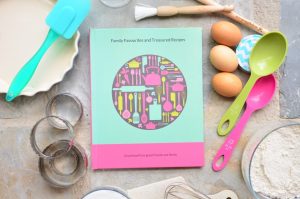
recipegiftbook.com enables friends and family to give a truly meaningful gift to the bride and groom, the gift of a recipe.
Create a beautiful keepsake to celebrate your wedding day, a cookbook filled with recipes from all your wedding guests.
Whether it’s treasured family recipes or modern favourites, your guests will have fun sharing their recipes, photos and personal messages with you. Guests simply add their recipes online then following your wedding a charming hardback cookbook is sent to you.
Creating a ‘recipe gift book’ is a great way to bring both families together in the run up to a wedding. It’s a special cookbook and a wonderful way to collect precious recipes and create something unique to celebrate your marriage.
The bride and groom can choose from six recipe book designs and personalise the front cover title to make their book unique. When complete the bride and groom will receive a beautiful hardback book, presented in a gift box. The finished recipe book is free for the bride and groom. The guests just pay £4.99 to add a page to the book. The bride and groom can order additional copies of their recipe book and even allow guests to purchase a copy too.
recipegiftbook.com supply the ultimate personalised wedding present from all of the guests, a gift the bride and groom will treasure long after their wedding day. Take a look at their introductory video to find out more: https://www.youtube.com/watch?v=Di7YPD3koBA
@recipegiftbook
@recipegiftbook
recipegiftbook
@recipegiftbook
Tree of Hearts
Tree of Hearts specialises in personalised wedding stationery and has over 90 beautiful collections to choose from including traditional, modern, vintage and beach designs catering for a wide range of tastes and styles. They offer quality stationery at affordable prices and have everything you need from save the date cards and wedding invitations to order of service, table plans, fingerprint trees and thank you cards.
Free samples are available upon request so you can see and feel the quality of their stationery ensuring it is perfect for your special day.
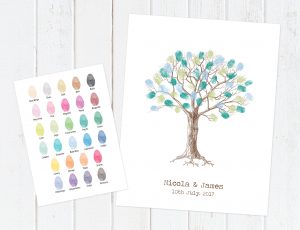
Fingerprint trees can incorporate approximately 50 (small), 80-100 (medium) or 150-200 (large) fingerprints per tree size. Includes a personalised print and 3 small ink pads in colours of your choice.
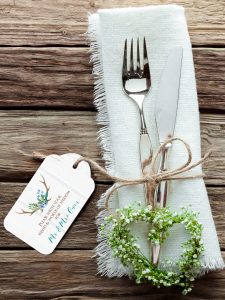
Wishing tree & wishing tags includes a white freestanding manzanita wishing tree (90cm tall) supplied with personalised wishing tags & sign in a design of your choice. The tags can be used for favour tags or wishing tags.
@tree_ofhearts
@TreeOfHeartsWeddingStationery
@tree_of_hearts
by Hanami Dream | 1, November, 2016 | blog, tips
As someone with dietary requirements, I’m always impressed (& relieved) when different diets are considered at a wedding (which also means I’ve got something to eat to soak up all that free drink!)
I stir clear of most dairy products (apart from the occasional chocolate treat and an annual ice cream when I’m on holiday) and have done for about 30 years now (yikes – now that’s showing my age isn’t it!) I found that dairy was a trigger for migraines and now I find that cheese or cream doesn’t agree with my stomach either after years of abstinence. Don’t get me wrong – I don’t miss it. In fact, just thinking about the smell of melted cheese makes me feel queasy!
When I was younger it was hard to find alternatives to dairy but now the supermarket shelves are stacked with wonderful ‘free from’ and alternatives to suit varied and diverse diets. I certainly don’t feel so difficult to cater for anymore!
For me, there’s not always an instant reaction to eating the things I avoid but for some people they may have a severe allergy or strong beliefs that mean they must not come in to contact with some foods.
That’s why I’m a strong believer in the importance of asking wedding guests if they have any special dietary requirements in order to respect their health, religious, moral or political choices. Plus it’s nice to have happy guests who don’t feel awkward (or hungry), tucking in to delicious food and not the same old unimaginative alternatives.
Here’s my quick ABC of how to make sure you’re covering all your bases when it comes to catering for special dietary requirements.
A – Ask your guests as early as you can. Include a section on your RSVP cards (to send with the invites) for them to be able to fill in any dietary requirements. Or even on your save the date cards if you’re really on the ball. You could even give them an example of what the menu might be and get people to choose their meals in advance.
B – Base the menu on your tastes – it is your day after all! It’s a good starting point to think about what you like and dislike to eat plus what you have enjoyed feasting on at weddings that you’ve attended as guests. You can ensure the food will fit your theme and style of wedding. However be mindful if your tastes are unconventional as you want to be inclusive to your guests too. Which leads us to the next point…
C – Customise your menu. Create your menu in such a way that anyone with an allergy or dietary requirement can still enjoy the main aspect of the meal. However, for example, a vegetarian option shouldn’t just remove the meat element of the dish but rather have a delicious alternative instead. Likewise, for a non dairy person like myself, having the option to be able to add your own sauce to a meal (that may have cream, yoghurt, butter or cheese in it) could mean that I could still enjoy the same dish but without the sauce (or with a substitute sauce) rather than it coming served in the sauce. The main dish could remain the same but with some ‘pick and mix’ elements to ensure dietary requirements are met. A clever caterer will be able to think of ways to alter dishes to suit.
D – Diets to consider could include the following (although this is by no means an exhaustive list):
- Vegetarian
- Vegan
- Non dairy
- Gluten free
- Kosher
- Halal
- Hindu
- Diabetic
- Low fat
- Low salt
- Nut free
- Child friendly
- Pregancy
E – Establish and eliminate elements of the menu. Once you have a list of your guests requirements you can start to construct a menu with your caterer or venue that can suit their needs. If you are unsure what they can/can’t eat then it is always best to confirm with them and show them specific ingredient lists from the chef. Decide how many main dishes will be offered to guests such as a meat, a fish and a vegetarian option that can then all be adjusted to take in to account the different diets.
F – Figure out the style of meal being offered. How you serve food can have an impact on offering alternatives. For example, a sit down meal can mean that meals can be tailored individually though could be increase costs to prepare separate dishes for different people. A (well labelled) buffet could mean that guests can choose the food that is most appropriate to their diets although means that food may have been premade and harder to adjust on the day. A hog roast is a cheap and tasty way to mass cater but provides limited choices and alternative options.
G – Go and meet with your caterer / venue. Any chef worth their weight in gold won’t be phased (or surprised) by the challenge of catering for guests with different dietary requirements. As long as they know enough in advance, they can plan and prepare for the different meals. It is also worth checking how they prepare the food if allergies or religion are the reason for some special diets as you may need to use specific caterers for some meals.
H – Have your cake and eat it. Don’t forget about all meals and beverages that are going to be consumed during the day including your wedding cake. Think about having different tiers of the cake made to suit different guests. Or even having an alternative to a cake altogether.
I – Inform your guests. Make sure that you check the final menu with the guests that are most affected so that they know what they will be able to eat on the day. Communication plus no surprises puts most people at ease.
J – Just checking. Confirm numbers, menu and dietary requirements with the caterers / venue just prior to the big day so that it’s fresh in their minds. Plus check that the waiting staff know where the special meals are to be served at each table. Perhaps put a subtle symbol on the name places that signifies a special meal.
You don’t have to provide an a la carte menu with several variations, you just need a flexible kitchen and an inventive chef or caterer who can conjure up a meal to suit all diners.
Enjoy picking the menu for your wedding breakfast. Remember that it is your special day and you should choose what you both love. You won’t be able to please all your guests however keeping them well fed will be a good start to keeping them happy. Bon appetite!
See another of my blog posts of other ways to keep your wedding guests happy.
by Hanami Dream | 29, September, 2016 | blog, tips
AS FEATURED ON BRIDE MAGAZINE:
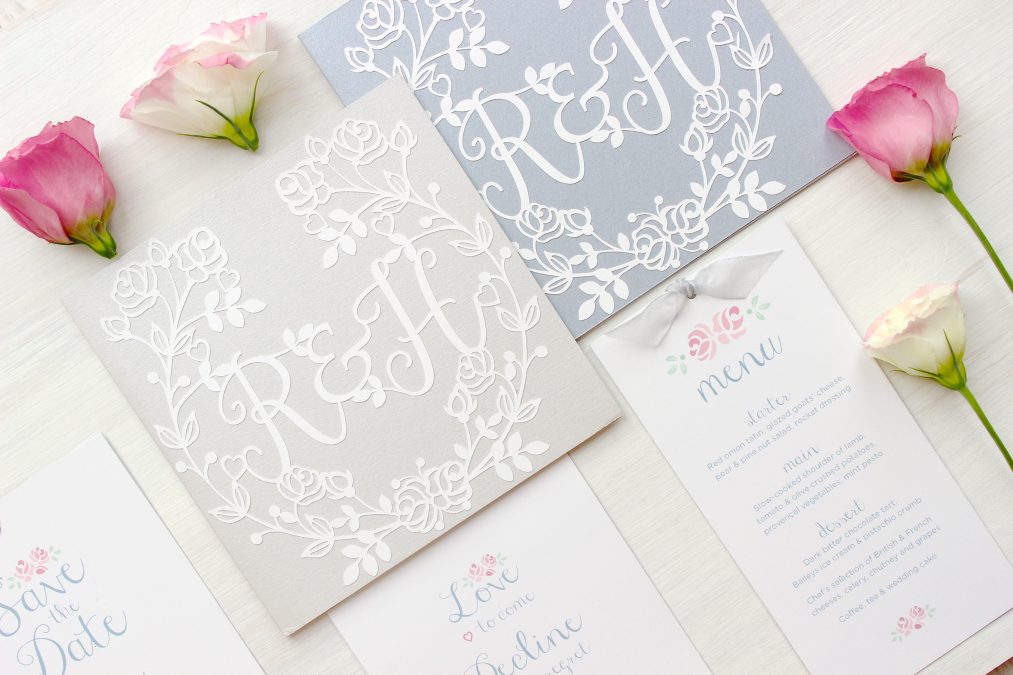
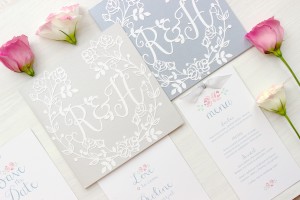
According to the infamous shampoo advert, you never get a second chance to make a first impression. Whilst you have been living and breathing all things to do with your wedding, the first time your guests may have any idea about your big day is when your wedding invitation or save the date card lands on their doormat.
Here’s my guide to planning and sending your wedding stationery to make sure that first impression counts:
why
There are many reasons why it is important to send invitations. Firstly, you want to share your good news with people and to invite them to celebrate your special day with you. Knowing how many guests are going to be at your wedding will also give you a clearer idea of the number of people to cater for and the venue size required.
But this is about more than just logistics, this important piece of mail will set the scene, the tone, the theme and your guests’ expectations of your special occasion. It also acts as way to educate and organise your guests so that they know what is expected of them too.
What you say, when you send it, to whom you address it and what it looks like all provide the first experience your guests have of your wedding. So it’s really important that you plan your stationery wisely to make the best first impression.
 how
how
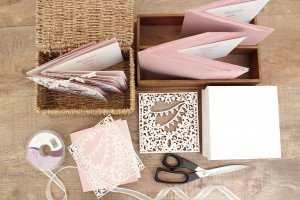
There are three different routes you could go down with your invitations – the traditional way of sending out paper stationery, the more technological (and environmentally friendly) path, or a combination of the old and new which might involve paper invites but collating the RSVPs electronically.
Whichever route you take, it’s great to
- coordinate the stationery with the theme of your wedding
- coordinate all the stationery as a whole
- ensure that you have a consistent look and feel with everything that you do online and offline
- order all your paper stationery at the same time to save on costs
- don’t forget to factor in the cost of envelopes and stamps to your budget
Bear in mind that the more people you invite, the more postage you’ll have to spend and then multiple this by how many times you send different stationery from the suite (ie save the date cards, invites, added info etc).
 what
what
Think of your wedding as a big marketing campaign – you need to consider promotion of it before, during and follow up afterwards to get the best results (and response) from your audience! A well informed guest is a happy one and communication is key so your guests don’t encounter too many unforeseen surprises that they haven’t accounted for.
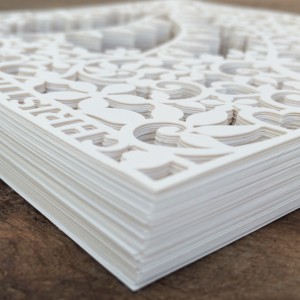
Here is the full suite of paper stationery to consider. I’ve included some US trends that we are starting to see more of in the UK especially in more formal weddings (of course this list covers all types and styles of wedding day, so omit the elements that do not suit your big day):
Pre-wedding day
- Engagement announcements
- Engagement party invitations
- Be my bridesmaid / best man cards
- Hen party / stag do invitations
- Save the date cards
- Wedding invitations
- Information sheets
- Schedule of the Day
- Accommodation
- Gift list
- Map / directions
- Special requests (ie diet / high chair etc)
- Song requests
- RSVP cards
- Rehearsal dinner invitations
On the wedding day
- Order of service / Programme
- Table plan / Escort cards
- Table numbers
- Place name cards
- Menus
- Signage / labels
- Pew cards / reserved seating
- Favours
- Buffet food
- Post box
- Guest book
Post wedding day
- Thank you cards
- Cake boxes
 when
when
Pre-wedding day
- 10-12 months before the wedding day – send your save the date cards (or add a note in Christmas cards to save on additional postage).
- 4-6 months before the wedding day – send out the invitations (consider sending them out in waves if you want to see how many people reply positively and then decide whether you could ‘bump up’ any evening guests to be all day guests if you have some people that can’t make it). Include extra information documents to provide details of the day and give the guests details of how to contact you to confirm their attendance. Put a date on the invites to tell guests when you need to have their RSVP back to you.
- 6-8 weeks before the wedding day – check any last minute changes to your guest list and chase any outstanding RSVPs so that the table plan and place cards can be produced and you have a final number for order of services and menus for the day.
Post wedding day
- asap after the wedding day – send out wedding cake in boxes to any friends or relatives that couldn’t make the big day.
- 2 weeks-3 months after the wedding day – etiquette dictates that a you should respond to people in a polite time frame as soon as you receive their gift (or as soon as possible after your return from honeymoon) to thank people for their gifts and attendance.
 who
who
Once you’ve decided on what you’re going to send and when you are going to send it, you need to consider who the invite is going to and who it is coming from.
If your wedding day is going to be quite casual then your invitations should reflect this, whereas if it’s formal then the style and wording of the invites will be different to fit with this theme. The look and feel should mirror the content too.
There are so many variations on what you write inside the invite, as there are many factors that will influence the wording of stationery. For example, every family has different circumstances, it depends who is ‘hosting’ the wedding and often who is paying for the wedding. Here’s my advice on the elements to include which can be adjusted for all the different scenarios:
- Start the invite with who is hosting the wedding (whether this be the couple, the bride’s parent/s, groom’s parent/s, both sets of parents, or a mix of all of the above)
- Use ‘request the pleasure of your company’ (or can be more casually put like ‘please join us’)
- Write in the passive 3rd person for a more formal style
- List the bride before the groom (use bride’s first and middle names only for formal invites, plus groom’s full title)
- Include the time, date, month, year
- Indicate the venue with full address
- Note if there is a reception or meal afterwards (including when and where this will be held)
- Provide RSVP date and return address
To avoid confusion, it is often better to be really specific about who you are inviting and to which parts of the day they are invited to, so that they are not left in any doubt. Other things to note (so that all guests are on the same page) is whether there will be:
- a dress code
- children invited
- plus ones for single guests
Above all else, ensure that your invitations (and other stationery) reflect your personality and the look and feel of your special day. As long as you’ve got the important information on them (who, when, what, where) you can then add your own personal touches so that it fits your wedding day.
[Photography credits – Paper Tree Design]
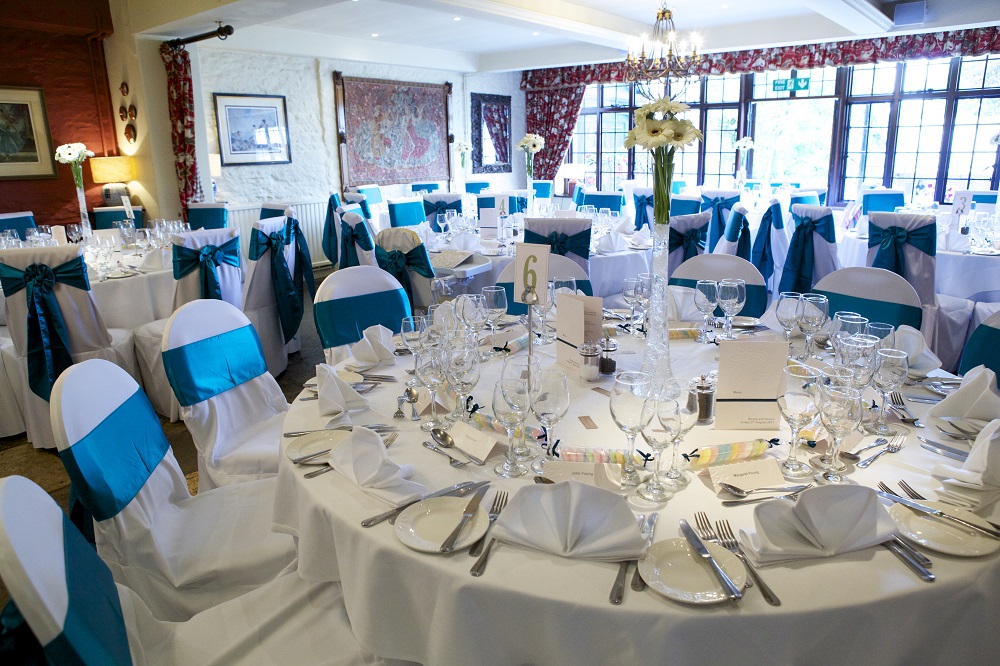
by Hanami Dream | 11, August, 2016 | blog, tips
AS FEATURED ON BRIDE MAGAZINE:
Once you’re over the hurdle of preparing your guest list and the headache of waiting (and chasing) for RSVPs, it will be time to decide where to seat your nearest and dearest for your wedding breakfast.
Take a look at our 10 point guide on how (and where) to seat your wedding guests to help you through what can be another tricky juggling act of keeping everyone happy. There’s etiquette, tradition, logistics, safety & practicalities to consider (as well as who Aunty Vera may have fallen out with) so that all can see and been seen by the bridal party.
1) size and shape
Firstly, establish what is possible at your venue. What could you fit in to the room? What is already available there? You need to think about the space, tables and chairs. Taking in to account the size, shape and style of these three elements. Count the number of tables and determine how many chairs can fit around the different shapes of table. This amount should accommodate your final guest numbers.
2) style of meal
How you lay out the tables can be dictated by the style of food that you will be serving. For example, if you’re having a casual meal or buffet then you may opt for guests to pick their own places when they’ve got their food rather than a formal sit down meal where everyone has an allocated place setting. To get guests to mix up, you could provide a bowl of numbers and people pick out their table number as they enter the reception.
3) structure
The formation of the tables will depend on their shape and the atmosphere you want to create. Family style sharing meals work well on rectangle banquet tables with benches on either side. Laying long tables in a horseshoe or T shape creates a focal point of the bridal party. Whilst round tables surrounded by chairs can cluster groups together for good interaction. Square tables give a great modern feel and don’t feel restricted to use a uniform type of table – mix and match shapes and sizes to suit your needs.
4) standard
Traditionally there is a head (or top) table containing at least the happy couple. In addition, etiquette suggests their parents, along with chief bridesmaid and groomsman join this long table facing the guests so that everyone can view the top table (eg Chief Bridesmaid, Groom’s Father, Bride’s Mother, Groom, Bride, Bride’s Father, Groom’s Mother, Best Man). Working away from this focal point, others from the wedding party are grouped near to the top table, followed by closest relatives, then friends, and finally colleagues.
5) substitutes
Let’s face it, you can have whoever you want on the top table (or no top table at all!) Nowadays there are many alternative schemes to factor in different family circumstances and partnerships. The top table could be round rather than rectangle so the wedding party get to chat too. The top table could just contain the two most important members of the day whilst the rest of the bridal party host their own family members on separate tables. Sometimes brides and grooms choose to sit at a different table for each course to mingle with all their guests.
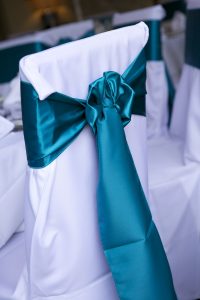 6) special considerations
As well as knowing how many people you’re seating, you’ll need to factor in any accessibility requirements for any young, elderly or incapacitated guests such as incorporating requests for highchairs. People with any tasks to carry out during the meal or speeches should be able to get out of their place easily too. There’s always a temptation to match make with a singles table, though my advice would always be to keep people with people they already know (and like). Tradition suggests alternating men and women around a table.
7) system
How to plan who sits where is a fine and delicate art often thrown by last minute cancellations and feuds. There are lots of online planning tools, apps and software available to help solve this issue. However, nothing beats a large piece of paper containing the floor plan of your room with blank tables drawn in the right places. Then get some small coloured sticky tabs in perhaps three colours (for men, women and children). Write each guest’s name on the relevant coloured tab and stick these around the table templates until you’re happy with the seating combinations.
8) selecting tables
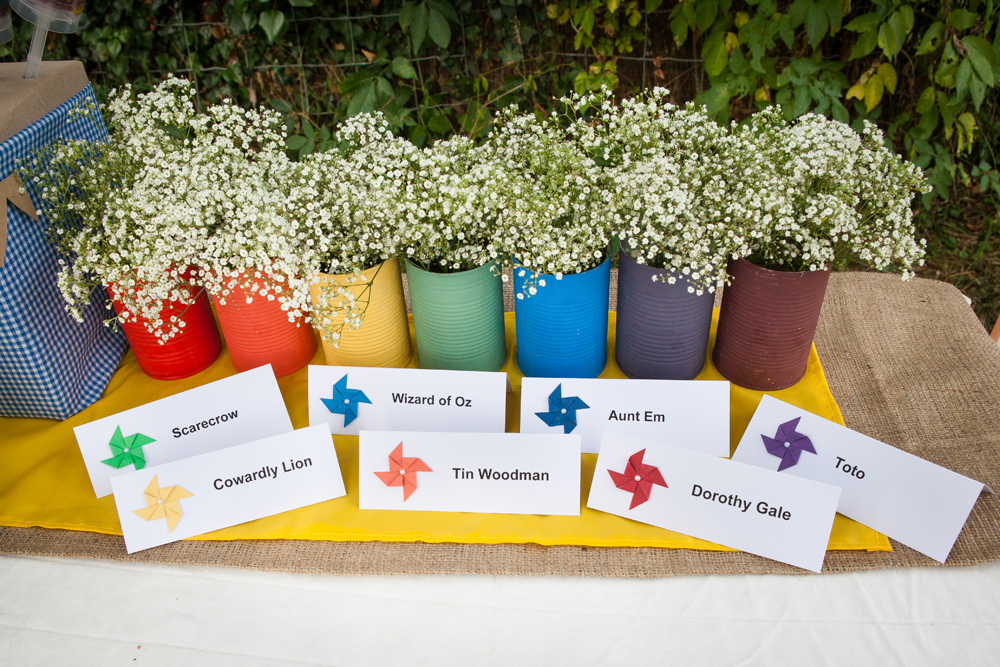
There are many options and ways to personalise your tables including the names you give each table or how you number them. One of my favourites at the moment is showing a picture of both of the happy couple at the age that the table number corresponds with.
9) seating plan
There a couple of options to ensure that guests get to the table you’ve allocated to them. Firstly, you can display a seating plans of the different tables listing which guests are sat at each table. Ideally have a couple of these plans to avoid everyone bunching around one and placing it outside of the room for people to view it ahead of time to avoid a rush on entry. Alternatively, escort cards can be displayed (perhaps alphabetically) which each contain the name of a guest along with the table name/number where they are to be seated. In both scenarios, place name cards on the table can show guests where to sit or they could pick their own seat.
10) seating at ceremonies
It’s not just the reception to consider but you may want to offer a modern take on where people sit at the ceremony too. Traditionally in a religious building, the Bride’s family sit on the left of the premises and the Groom’s sit on the right. However, many people are asking their guests to pick a seat not a side. Plus if the venue is less formal you can move away from rows of chairs and opt for a circle around the couple or even a spiral of chairs working inwards to the couple.
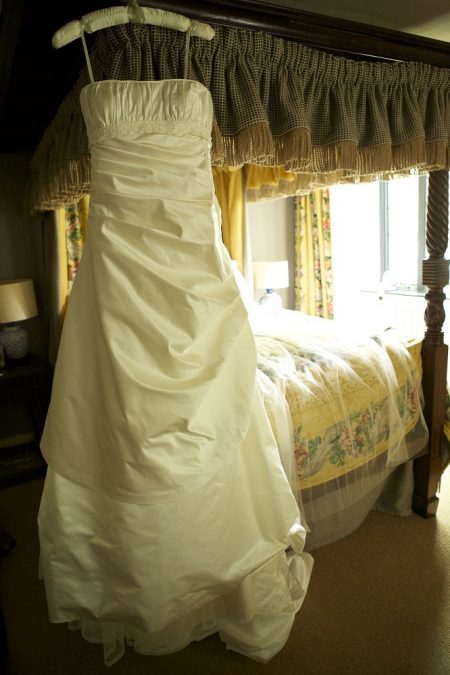
by Hanami Dream | 19, July, 2016 | blog, tips
If your big day is just around the corner, you may be getting down to the nitty gritty of confirming all the final numbers with the caterer and venue, finishing off making favours, as well as starting the wonderful part of beautifying yourself in preparation for the big day.
Even if you’re armed with the best schedule in the world (my forte by the way!) there are always a few minor things that crop up on the day that you can’t prevent or avoid. However, you can be prepared and plan for some eventualities.
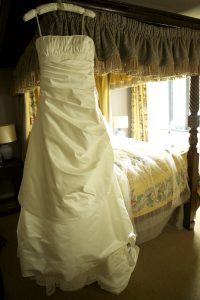
Here is Hanami Dream’s wedding day survival kit list for brides and grooms. It is not an exhaustive list but contains some items that I have found to be useful to carry (or better still get one of your trusty attendants to) on your wedding day to combat any little hiccups.
- Blotting paper – dab away any sweat or ‘shine’ on your face
- Chalk – to cover up any scuff marks on a white wedding dress
- Double sided tape – to avoid any ‘wardrobe malfunctions’
- Floss – to keep your smile looking at it’s best for all those pictures
- Foot insoles – to save your feet for all that dancing
- Hair bands, comb & pins – anything to keep your ‘do’ under control during the day
- Mints – for fresh breath for the first kiss (as well all the meet and greats)
- Nail file – to get rid of any snags
- Nail vanish – clear polish is good for stopping pulls in your tights turning in to ladders
- Paracetamol – light pain relief so you don’t have a headache for your first night together
- Plasters – in case of blisters from your amazing wedding shoes
- Rescue remedy – amazing herbal drops to keep you calm
- Safety pins – in case anything comes undone
- Sewing kit – for minor repairs like sewing on buttons
- Straws – so your lipstick stays in tact (and not on your glass) whilst you sip your drink
- Tissues – for dabbing away tears (hopefully of joy!)
- Tweezers – to get rid of any stray hairs
- Water – a small bottle on hand will make sure you don’t get dehydrated or a dry mouth when saying your vows
- Wet wipes – to freshen up during the day!
There are plenty of pre-made kits on the market that you can buy to fulfil the need for an emergency kit. However it’s lots of fun to pick and pack your own things that are personal and relevant for you and your big day. Perhaps you could prepare some for your bridal party or maybe your bridesmaids might assemble one for you.
What would you add to this list? I’d love to hear any of your suggestions (in the comments below) for items you’d have in your wedding survival kit.
by Hanami Dream | 2, June, 2016 | blog, holy trinity of wedding planning, tips
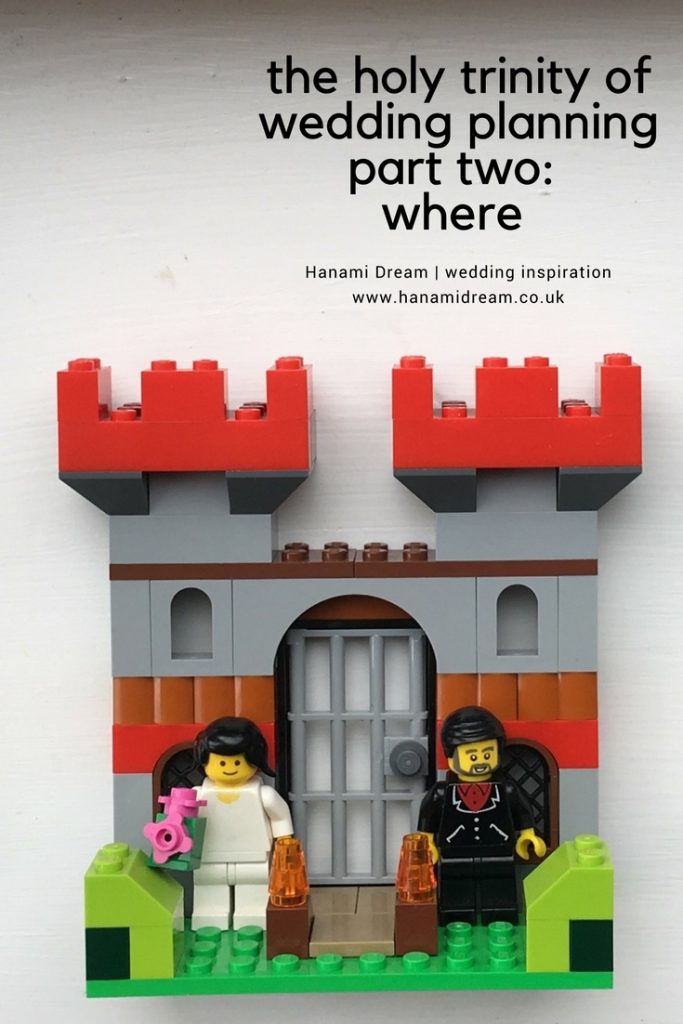 So far in the series, I’ve introduced the three key aspects of planning a wedding that pretty much affect every other thing that is connected with your big day. These are who, where and how much (otherwise known as your guests, venue and budget). This group of three things are very much intertwined. Plus when you hold your wedding is connected too! As previously covered (in the who post), nearly all the decisions you have to make about your wedding will come back to one, two or all of the elements in what I class as ‘the holy trinity of wedding planning’.
This month I’m going to tackle the where element and your all-important choice of venue (and will look at the last element in the trinity of how much another time).
Finding the right venue that is available at the right time, for the right price, for the right number of guests will be one of the first (and trickiest) parts of planning your wedding. But once you’ve decided on this element everything else will seem like a doddle! Before venue hunting, have a rough idea of your budget and how many guests you want to share the day with you. (I told you that the where, who and how much elements would come in to play.) And have an idea of when you want it to take place too. See my top tips below to give you an idea of some other factors to help you decide the place where you’ll say ‘I do’.
Nowadays, the world is pretty much your oyster in terms of options available. If you’ve seen ‘Don’t Tell the Bride’, you’ll realise that you can get married in all types of places!
1.Where in the world
Maybe you don’t fancy risking the British weather and want to get married outside of the UK, to jet off or elope. Destination weddings are certainly an attractive proposition and usually mean that all the details get handled for you by the hotel where you are staying. Plus you get your honeymoon and wedding all rolled in to one.
However, it’s worth considering that going abroad could limit who can come to the wedding (here’s the trinity coming in to play again) as not everyone will be able to afford to attend or elderly relatives may not be well enough to travel. Plus, just remember that whoever does come will be with you for your honeymoon too! Guests would have to factor in more time to attend the wedding, so the time of year that you have your wedding may also affect whether they could come.
Before booking your tickets, you should also check the legalities of your chosen country as it may be more hassle than it’s worth to be legally wed in that country (translating of documents, time and effort etc) so you may chose to do the legal bit at home before or after the glamourous beach part. (Don’t forget to make sure your passport matches the name you are travelling under – it might be best to travel under your maiden name unless there is time to get your passport changed before you travel. (See my checklist of other documents and organisations to tell about your change of name.)
2.Pinpoint the location
Once you’ve decided on whether you’re getting married home or abroad, then you need to narrow down the location and think about:
- Which country?
- Which region?
- Which town?
- Will it be in or out of town?
- Would the venue be easy to find?
All these factors will impact on travel costs and timings. Guests will need to consider whether they need to factor in overnight accommodation as well. Plus if your wedding is not near where you live you may not be able to visit the venue many times before the big day or meet with suppliers face to face to view products in advance.
Think about how far away the ceremony venue is from the reception venue in terms of distance but also timings. Depending on what time of day you’re getting married it may conflict with rush hour or school runs that could affect traffic and people travelling between locations.
Wherever you get married, if you are having a Church of England wedding ceremony, your Banns (an announcement of your intention to marry) need to be read in the parish where each of you lives as well as the church where you will be getting married (if this is somewhere different). So if you plan to attend the reading of your Banns, it might be harder if you have to travel far.
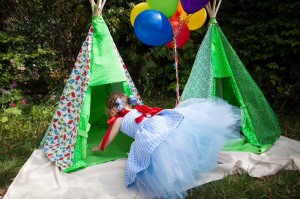 3.Formalities
What kind of day do you want? Perhaps you’ve already got your Pinterest boards at the ready (goodness knows how we ever planned anything before Pinterest!) If not, how do you envisage your wedding day? The style of wedding that you want will influence the venue you choose so think about whether you want something that is:
- All in one venue?
- Big or small?
- Relaxed or formal?
- Inside or outside?
- Urban or rural or coastal?
- Unique or package?
- Adults only or child friendly?
- Organised for you or somewhere you can bring together your own group of suppliers?
- What kind of theme do you want?
- Vintage
- Rustic
- Glamourous
- Country garden
- Festival
- Tropical
- Medieval
- Carnival
- etc etc
4.Legally speaking
You could have a religious or civil ceremony, or perhaps have a blessing in an amazing off-the-beaten track location and do the legal bit at another time. According to the Citizens Advice Bureau in the UK, at the moment you can legally get married in the following places:
- a Register Office
- premises approved by the local authority such as a hotel
- a church of the Church of England, Church in Wales, Church of Ireland, Presbyterian or Roman Catholic Church in N. Ireland (opposite sex couples only)
- a synagogue or any other private place if both partners are Jewish
- a Meeting House if one or both partners are either members of the Society of Friends (Quakers) or are associated with the Society by attending meetings
- any registered religious building (England and Wales only)
- the home of one of the partners if the partner is housebound or detained, for example, in prison
- a place where one partner is seriously ill and not expected to recover, for example, in hospital
- a licensed naval, military or air force chapel
In addition, owners of premises that are regularly open to the public (ie stately homes, hotels and civic buildings) can apply to hold civil marriages. Generally these places need to be in a permanent built structure and not an open air venue. So it’s worth checking with your dream venue to check if you could get legally married there.
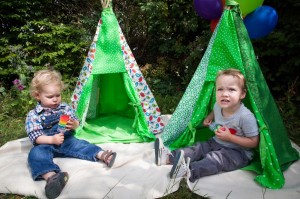 5.Location, location, location
Whether you’re having a one-stop venue, or having the legal part somewhere else, you’ll want to have somewhere you can relax, eat and have fun with your guests after the ceremony. There are lots of different types of venues to chose from for your wedding reception including:
- Aquarium
- Barn
- Beach
- Castle
- Gallery
- Historic venues
- Hotel
- Landmark venues
- Library
- Marquee style – see my guide to a tipi wedding
- Museum
- Outdoors
- Own home
- Pub
- Restaurant
- Sporting venues
- Stately home
- Zoo
How far in advance you’re planning might open up more possibilities and how much you have to spend will offer different options. Plus the number of guests will complete the trinity of factors that will influence where you pick.
See my list of Top 20 venues in and around Oxfordshire and the Cotswolds for some local venue inspiration.
6.Size does matter
With your trusty (and let’s be honest probably controversial and stress inducing) guest list at the ready, you’ll be able to determine what size of venue you need. Other things to think about with your guests include:
- Will you be feeding all the guests?
- Will it be a sit down meal or buffet? (If you want to all be sat around tables that could change the number of people you can fit in a room versus if people are stood mingling around.)
- Will you be having all the guests for the whole day? Or will you have some for the meal and some will come in addition later for the evening?
The size of the venue will influence how many guests you can invite but you could increase the numbers by having an evening section that doesn’t require everyone to be sat down to eat.
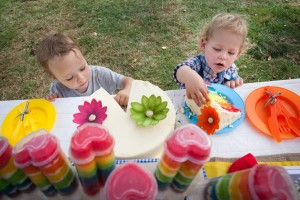 7.Icing on the cake
So what’s really important to you? What are the things you won’t compromise on – those things that your wedding venue must have to make your wedding perfect?
- Do you require parking? How much parking is required?
- What facilities are important to you?
- Do you need disabled access?
- How many rooms will you need?
- What size of rooms are available?
- Are there separate rooms for getting ready beforehand?
- Is there a space for children or for elderly to escape the main area?
- Will yours be the only wedding at that venue on the day?
- Is there accommodation at the venue?
What facilities or factors are on your non-negotiable list?
8.The fine detail
They’re probably not deal breakers, but there may be a few minor points that could sway your decision or would give a different day depending on the decisions by individual venues about their policies on:
- Confetti
- Candles
- Marquees
- Fireworks
- Helicopters
- Music switch off time
- Enough power
- Use of your own suppliers
- License for alcohol
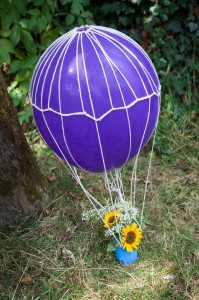 Picking your venue may be time consuming but the effort will be worth it as the venue is probably the most expensive element of the day, so you want it to be right. Once you’ve sorted the venue (and set the date) then you can start planning all the other finer details. With the who, where and how much at the fore front of your mind, everything else can fall in to place.
More about the money side of things soon in the last element of the holy trinity of wedding planning: how much.
by Hanami Dream | 25, May, 2016 | blog, tips
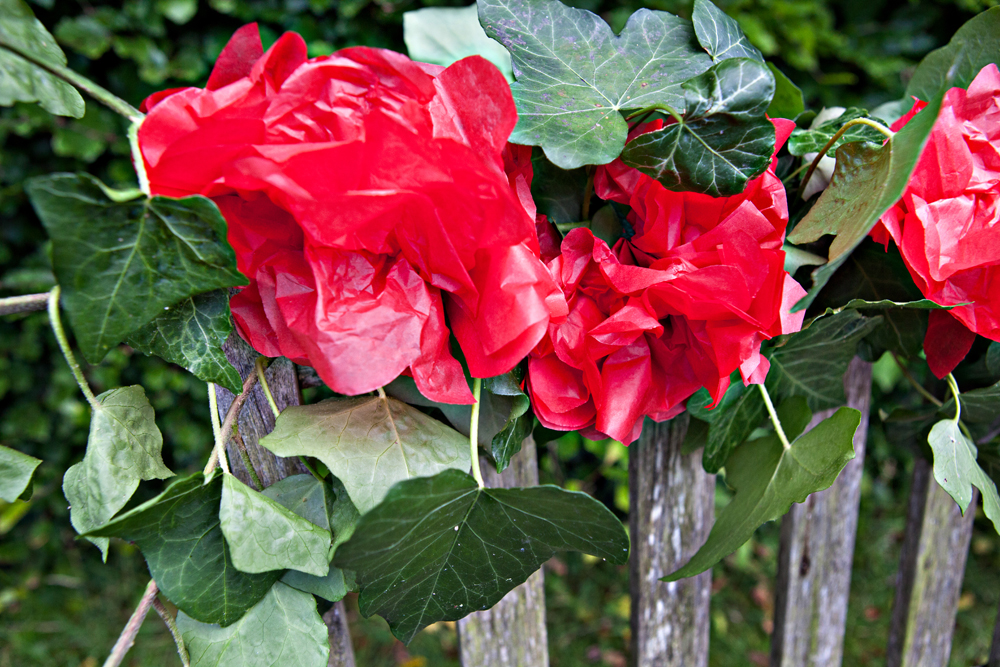
As I’ve mentioned in a few recent posts, picking your wedding flowers can be daunting with so much choice. But you can narrow down your selection by looking at what is in season on your big day and you may be swayed by what the colour and meaning of the flowers are said to signify too.

Here’s a quick run down of some colours and what they symbolise:
WHITE
- Purity
- Chastity
- Innocence
- New beginnings
RED
- Expression of love
- Conveys deep emotions
- Romantic
ORANGE
- Passion
- Energy
- Fascination
YELLOW
- Exuberance
- Joy
- Friendship
- Caring
GREEN
- Nature
- Harmony
- Fertility
- Peace
- Tranquillity
- Good health
BLUE
PINK
- Gratitude
- Happiness
- Admiration
- Elegance
- Grace
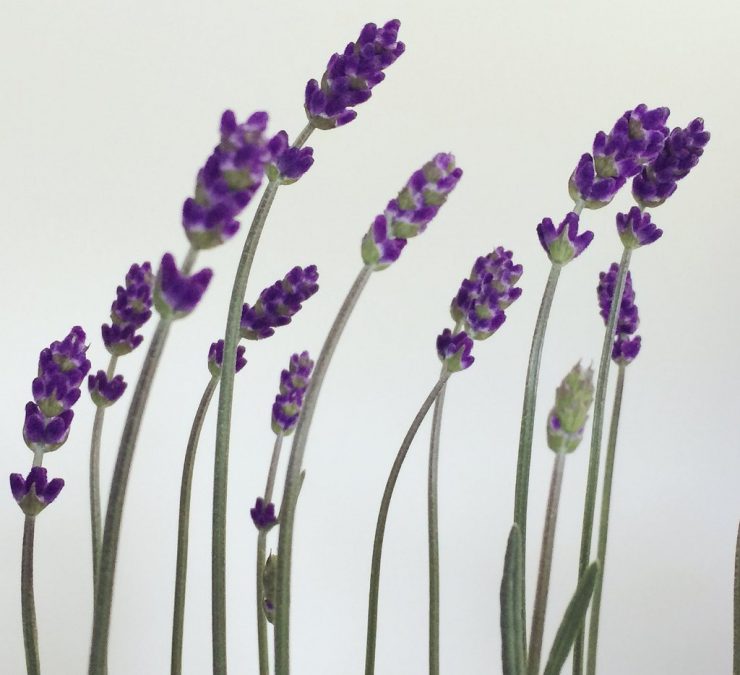
PURPLE
- Enchantment
- Regal
- Splendour
- Pride
- Success
Take a look at some other blog posts on seasonality, traditions and meaning of flowers at weddings.
by Hanami Dream | 25, May, 2016 | blog, tips
When I was planning my own wedding, I had a vision that the church would be bursting to the rafters with copious amounts of flowers flowing from every flat surface. I wanted to go on one of our romantic country walks near where we lived and collect up armful after armful of beautiful cow parsley and adorn the church with swathes of the lovely white flowers. I wanted the feeling of a country day to be in abundance as the first impression for my guests. However, I had overlooked one very crucial fact (one which Dee McMeeking makes in her guest post this month). I got married in August and by the height of the summer there wouldn’t be any cow parsley gracing the lanes of the British countryside anymore. I had to rethink my plan and pick flowers that were in season at the time of my wedding. (Don’t worry my amazing florist made such great suggestions on flowers that the place looked amazing anyway!)
To help you start to choose your flowers, here’s a very brief guide to some of the most popular flowers and shrubs used at weddings and when they’re mainly in season in the UK (and therefore more readily available and at a more reasonable price):
SPRING
- Apple Blossom
- Azalea
- Bluebell
- Broom
- Carnation
- Cherry Blossom
- Chrysanthemum
- Clematis
- Daffodil
- Daisy
- Forsythia
- Freesia
- Gladioli
- Honeysuckle
- Iris
- Jasmine
- Lilac
- Lily
- Orchid
- Polyanthus
- Rhododendron
- Tulip
SUMMER
- Aster
- Azalea
- Calla Lily
- Carnation
- Chrysanthemum
- Cornflower
- Daisy
- Dahlia
- Delphinium
- Forget Me Not
- Freesia
- Fuchsia
- Gerbera
- Gladioli
- Heather
- Hollyhock
- Hyacinth
- Iris
- Jasmine
- Lavender
- Lilac
- Lily
- Lily of the Valley
- Lisianthus
- Lupin
- Marigold
- Orchid
- Peony
- Rhododendron
- Rose
- Sunflower
- Sweet Pea
- Sweet William
- Zinnia
AUTUMN
- Chrysanthemum
- Dahlia
- Freesia
- Gladioli
- Gypsophila
- Hydrangea
- Iris
- Lily
- Lisianthus
- Orchid
- Rose
- Sunflower
WINTER
- Calla Lily
- Carnation
- Chrysanthemum
- Forsythia
- Freesia
- Gerbera
- Gypsophila
- Iris
- Lily
- Lisianthus
- Orchid
- Rose
- Snowdrop
This is by know means an exhaustive list but just a starting guide to begin thinking about what is available for your big day. Take a look at some other blog posts on colours, traditions and meaning of flowers at weddings.
by Hanami Dream | 24, May, 2016 | blog, guest post, tips
The tradition of wedding flowers is steeped in symbolism and there’s lots to think about in terms of colours, meaning and seasonality.
Flowers have been a part of wedding traditions since at least Greek times when flowers would have been grouped together in a garland to be worn on the head and seen as a gift of nature. It would also contains strong smelling herbs such as garlic or chives to ward off evil spirits. In the Middle Ages, garlands were worn entwined with ears of wheat to symbolise fertility. And with the rarity of baths, the bouquets were a nice fragrant distraction from any other lingering smells!
Nowadays, wedding flowers can compliment and reflect the theme, style, colours, tone and surroundings of the day. You can include flowers in your bouquet, corsages, button holes, table decorations, flower walls, displays at venues or as confetti or petals sprinkled by the flower girls.
Flowers are a big focus in 2016 not only in the décor but with hair accessories and headwear. Plus a new trend of ring corsages is emerging and the use of wild flowers like daisies. It doesn’t all have to be about the flowers, as foliage will be as important or instead of flowers in displays. Alternatives to traditional flowers are seeing the use of succulents in bouquets, on tables and given away as favours. Plus instead of the usual confetti, there is now a herb toss as another option which gives such lovely aromas to this part of the day.
Then once you’ve finished with your bouquet (if you’ve not thrown it to your single friends), there’s also a lovely new trend emerging of the ‘lonely bouquet’ where you leave your bouquet in a public place, with a note for someone else to find – thus spreading smiles and the joy of flowers to others. (Google it, I’ve not made it up!)
We have asked the highly talented (and award winning) Dee McMeeking to help unravel some of the mysteries of picking the right flowers, at the right time of the year, for your special day.
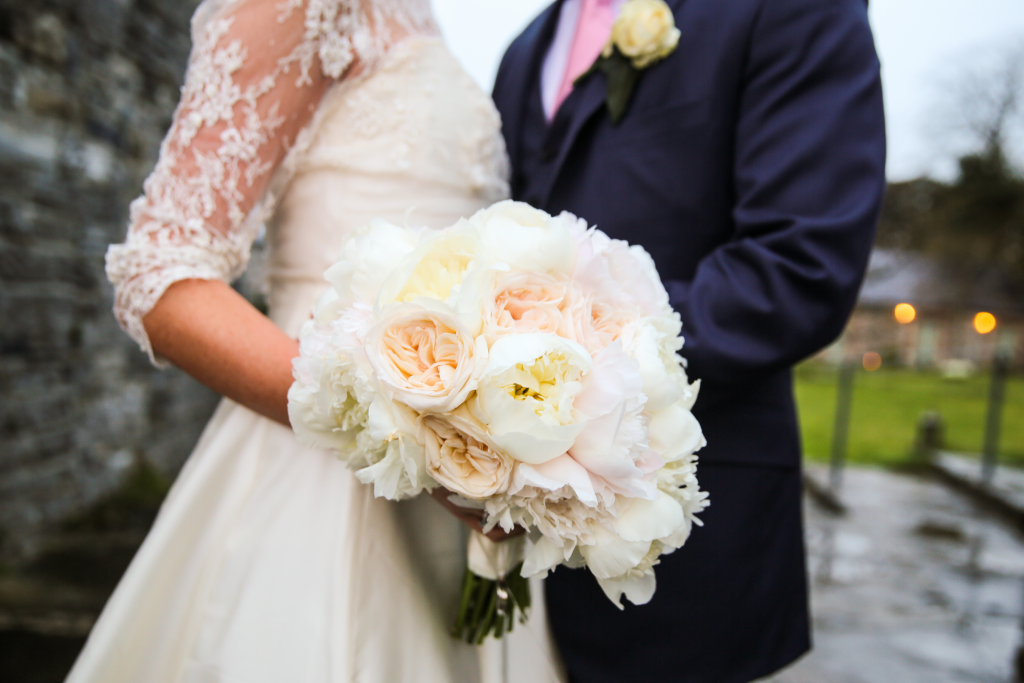
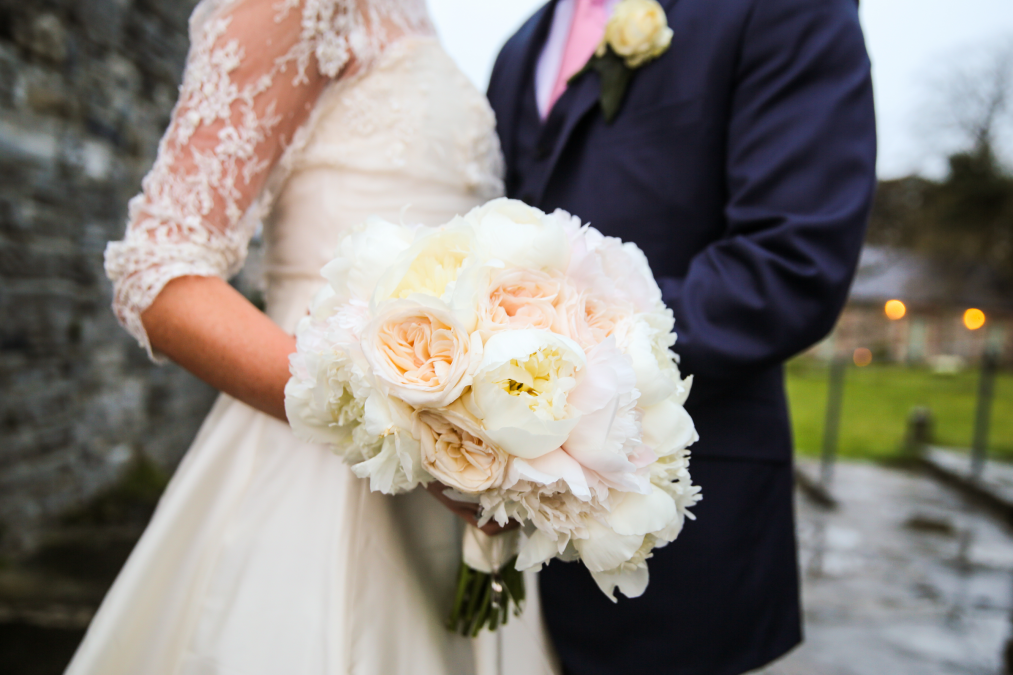
Photo credits: peony bouquet by Dee McMeeking, Photograph thanks to Nick O’Keeffe Photography
It’s one of those questions a bride to be will always be asked – “what flowers are you having?” and I know for some of you that can be a scary question! If you are blessed to know your hypericum berries from your viburnum then you will not need to read any further. But if your floral knowledge is more daffodils and dandelions then here is my quick guide to things you need to know about seasonal wedding flowers.
1) Flowers are seasonal
In theory that means that you can’t have certain flowers at certain times of the year. Think of it like Cadbury’s crème eggs or Easter Eggs – you don’t find them easily in shops in August or December! Flowers are the same. So if you have set your heart on a bouquet of peonies and you are getting married in the UK in November you may struggle. I say ‘may’ because the majority of cut flowers we use here in the UK are imported and most flowers are in season and being grown somewhere in the world, but that will make them more expensive.
Top tip: There are a couple of great apps that can help you out here – Flowerwheel, or Flowerbook. Both allow you to see when flowers are in season and more importantly photos and colours! So if your answer to the “what flowers” question is pink and white flowers, you can take this a step further and get some ideas with super search functions by colour.
2) Flower prices vary during the year
Flowers are one of those products where the prices will vary, sometimes quite significantly, at different times of the year. It’s as much about supply and demand as it is about seasonality. There is one big hot spot in the year that I have to mention – Valentine’s Day! The price of red and pink roses can treble if not quadruple just for that week. But other flowers can be cheaper than normal – such as orchids – purely because everyone is buying red roses.
When something is in season, it is naturally growing at its peak, the price is lower. So if you work with seasonal flowers you can get more for your money.
3) Using local flowers can save you money
More and more brides are opting for an informal look with their wedding flowers. The country garden “just picked” look where your flowers look more natural and less structured. If this is your style then you can do your own wedding flowers – certainly for your wedding reception, you might want a bit of help for bouquets and button holes. There are UK based growers who will sell you seasonal flowers “by the bucket” you just pre-order them, collect them, and then display them in your own personal style. Buying direct from the grower will save you some money and you will have very fresh flowers, often picked that day. To find your local suppliers check out this site http://www.flowersfromthefarm.co.uk/
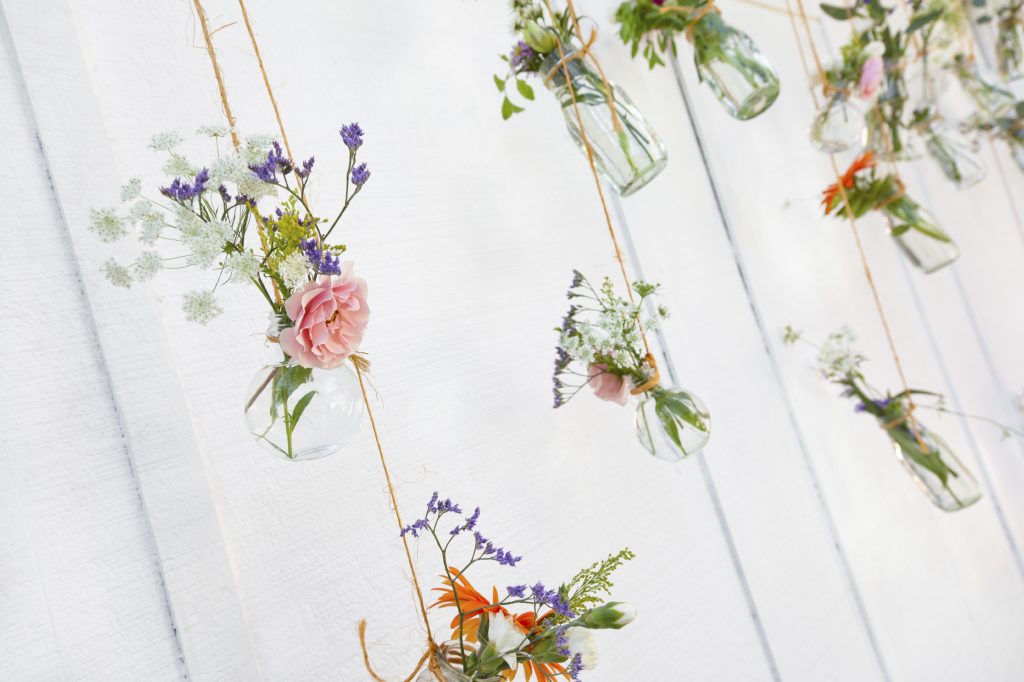
Photo credit: ©iStock/jesshorsenaround
4) The colours of flowers change with the seasons
I mention this purely from an experience I had with a bride who was fixed on her colour scheme of navy and gold and her flowers HAD to match to these colours. Now even at the peak of any floral growing season you are not going to get gold flowers and navy is also a tricky one too! Especially if you are in February in the UK! So if you are getting married in Spring or Winter remember that you may have to compromise with your flower choices. My solution was to go neutral with the flowers – ivory, white and creams and then add her gold and navy in through adding details such as ribbons and containers. Sometimes you may just need to be a little creative with your colour scheme.
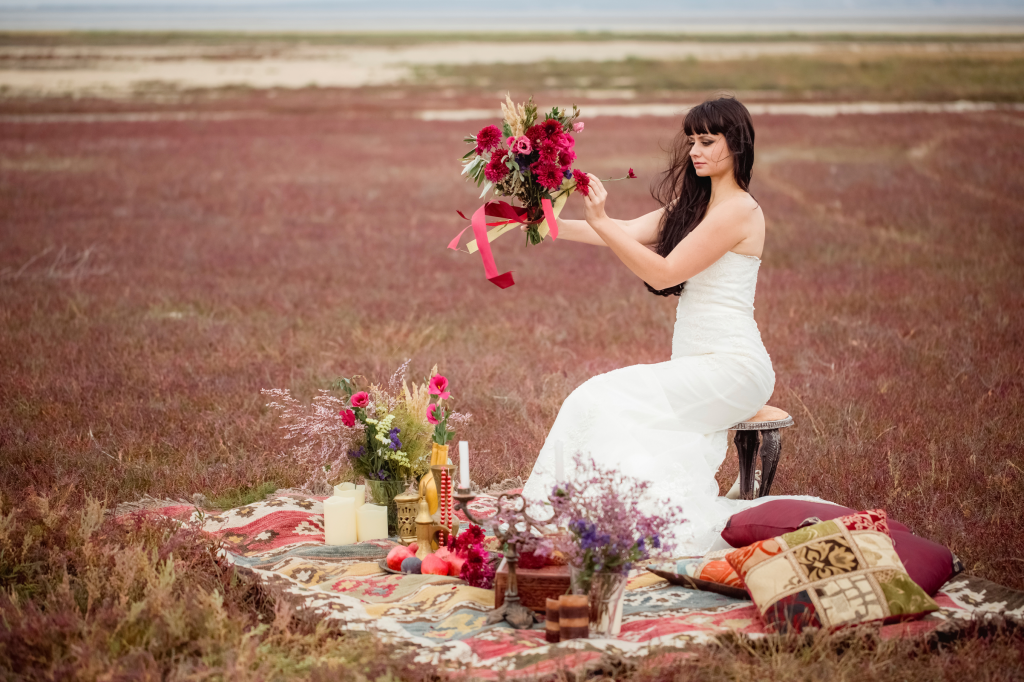
Photo credit: ©iStock/EvgenyBaranov
5) Where do I start with selecting my flowers?
Here is how I would approach finding out what is in season for my wedding flowers. First of all start with your wedding date and figure out which season you are getting married in. Search for “wedding flowers in season UK” now the UK bit is important because if you stumble on an American wedding blog in your search results what’s in season there may not be accurate for you! You will be surprised how many great guides there are already out there on blogs (just like this blog- check out these posts on seasonality, colours, and meaning of wedding flowers). Then I would pick out a few of these flowers that I liked and pop straight over to Pinterest and create a wedding flowers board. Search for “wedding flowers with xyz flowers” and see what emerges. When you have some visuals and you know roughly what is available at that time of the year you have enough research to either take to a florist or to source the flowers yourself!
Happy planning!
Dee McMeeking is the designer (wedding planner, wedding stylist & floral designer) behind Dee McMeeking Wedding Styling, a wedding styling & floral design business based in Warwickshire, UK & Dublin, Ireland. If you’re a creative with lots of great wedding ideas but need some help to bring your unique style to life on your wedding day, then contact Dee today at weddings@deemcmeeking.com. Dee works with clients from anywhere in the world and is waiting to hear more about your wedding styling ideas.
@deemcweddings
@deemcmeeking